A Curve You Don’t Want
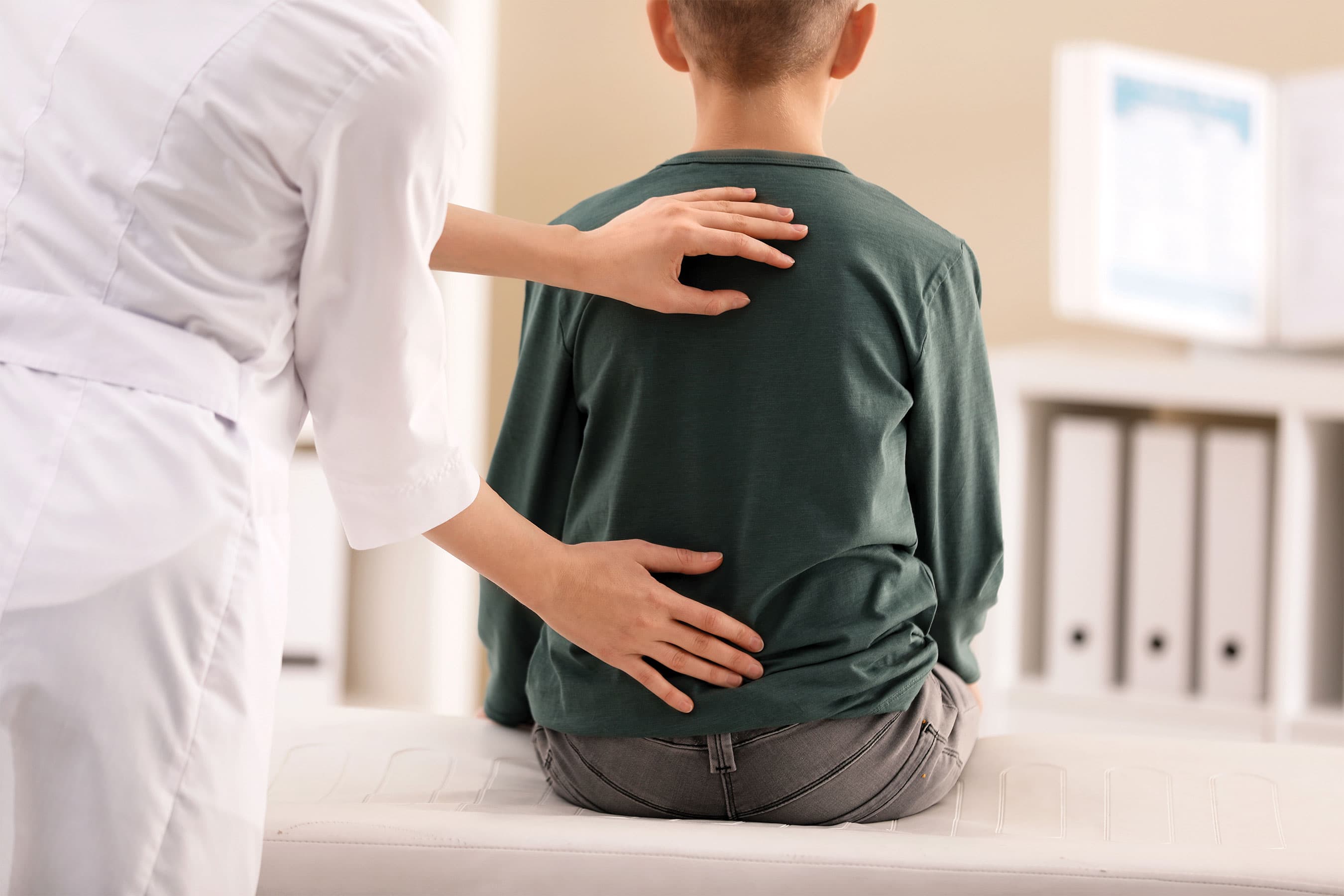
Curvature of the spine (or scoliosis) may sound like a scary diagnosis, but proper treatment enables children with the condition to lead normal, active lives. Small curves are a normal part of the spine and not cause for concern. But when the curve exceeds a certain range, children require medical help.
Scoliosis tends to run in families, but most often the cause is not known. However, studies show that scoliosis is not caused by poor posture, the use of backpacks, or any type of exercise. Scoliosis that requires treatment is eight times more likely in girls than in boys.
Scoliosis is often first detected during a routine visit to the child’s doctor or during a school screening. The development of scoliosis is usually gradual and painless. A curve can develop without a parent or child knowing it, until it becomes more obvious.
Signs of Scoliosis
- One shoulder appears higher than the other.
- The waist appears uneven.
- One hip looks higher than the other.
- The ribs appear to stick out on one side.
- The child seems to be leaning to one side when standing.
Early diagnosis and treatment lead to a better outcome. The diagnosis is based on a physical exam and x-rays. A curve of greater than 10 degrees on an x-ray is considered to be scoliosis.
For patients with smaller curves, the doctor may recommend just watching the condition. For bigger curves, the best treatment may be a brace to correct the condition. Sometimes surgery may be needed.