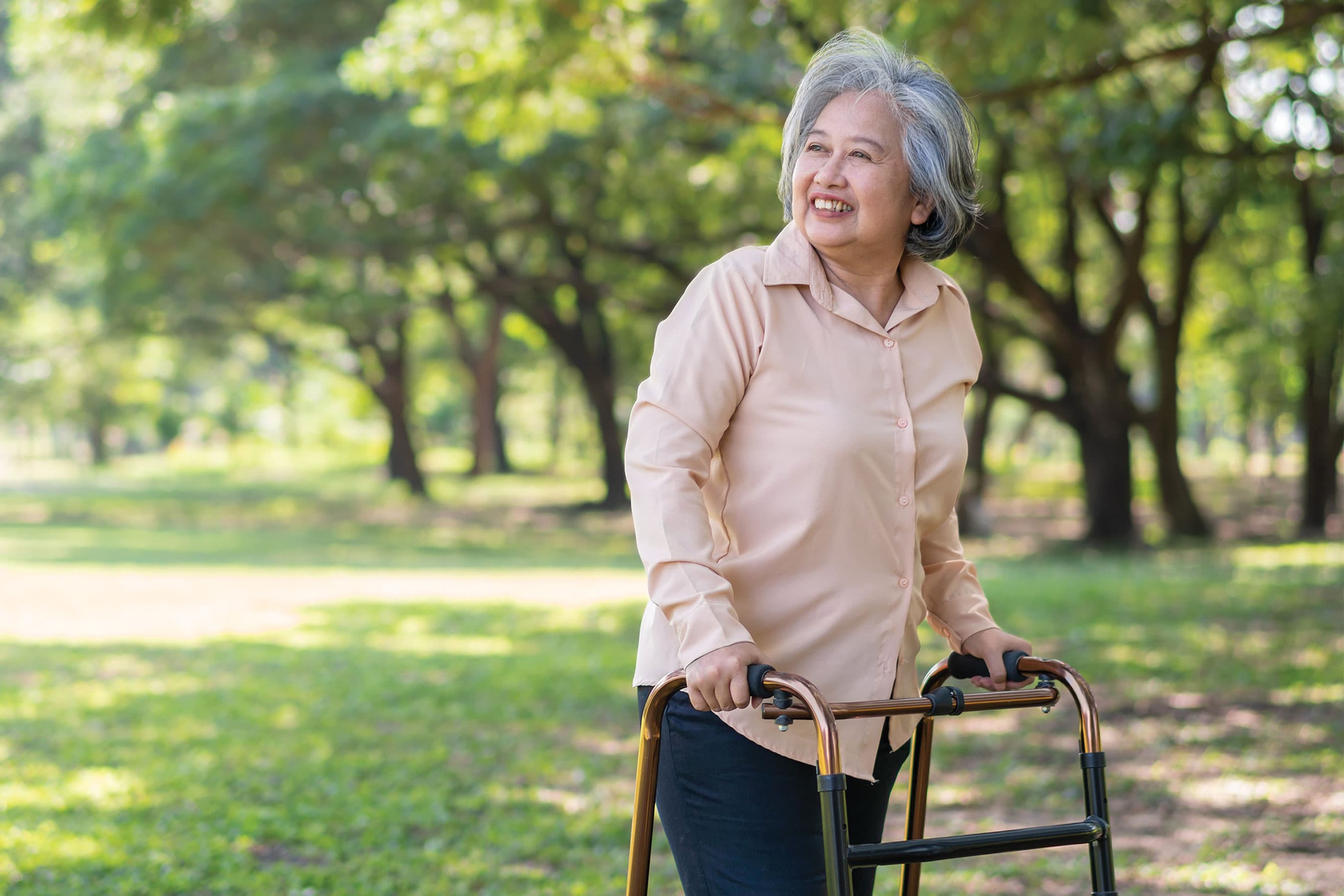
Osteoporosis is a loss in bone mass and bone strength. Bones become less dense. This makes them weak and easier to break. Any bone can be affected. The hips, wrists, and spine are the most common sites.
Low bone mass and osteoporosis pose a major health threat.
Osteoporosis affects 1 in 5 women over age 50 and 1 in 20 men over age 50.
Almost 1 in every 2 women over the age of 50 have low bone mass, which is a precursor of osteoporosis.
After a fracture, persons are more likely to have chronic pain, a fear of falling, and depression. They lose independence and have a lower quality of life.
One year after a hip fracture, 1 in 5 people die.
Signs & Symptoms
Osteoporosis is a “silent disease.” It can occur without pain. You don’t see or feel changes taking place inside your bones. Often, the first sign is a fracture of the hip, wrist, or spine. When signs and symptoms occur, they include:
Gradual loss of height
Rounding of the shoulders
Sudden back pain
Stooped or hunched posture
Causes & Risk Factors
Bone is living tissue. It breaks down and is replaced with new bone. Osteoporosis occurs when new bone does not replace old bone fast enough. Risk factors include:
Aging
Women are more likely to develop osteoporosis than men. White and Asian women are at highest risk. African American and Mexican American women have a lower risk.
Low estrogen level. This occurs with menopause.
Low testosterone level in men
Family history or broken bones as adults
A thin, small-framed body
Lack of exercise, especially weight-bearing ones, such as walking and dancing
Long-term bed rest
Low calcium and vitamin D intake or absorption
Smoking. Drinking too much alcohol.
Long term use of some medicines, such as corticosteroids, and some medicines to treat cancer, seizures, and heartburn
Having certain health problems, such as anorexia nervosa, an over-active thyroid gland, and rheumatoid arthritis. Persons with Crohn’s disease, ulcerative colitis, and celiac disease are at an increased risk, too.
Diagnosis
There is no cure for osteoporosis. Follow your doctor’s advice for when and how often to get screening tests for osteoporosis. The focus is to:
Prevent the disease.
Prevent further bone loss and fractures.
Build new bone.
All women 65 years of age and older should have a bone density (BD) screening test. Women who have had a fracture or are at a high risk for osteoporosis should get this test sooner than age 65, as advised by their doctors.
Older men should have a BD test if they have key risk factors for BD-related fractures:
A past fracture, possibly due to osteoporosis
Low body weight. Physical inactivity.
Prolonged use of corticosteroid medications
The most common test used to measure how dense bones are is a special X-ray known as a DXA or DEXA scan. You lie on a table and a technician moves a scanner above your spine, hip, or wrist. This safe and painless test takes about 10-20 minutes. Test results can identify persons who are at the highest risk for fractures.
Bone Density T-Scores*
Category
T-Score Range
Examples
Normal Bone Density
-1 and higher
+0.4
-1.0
Low Bone Density (Osteopenia)
Between -1.0 and -2.5
-1.2
-2.0
Osteoporosis
-2.5 and lower
-2.8
-3.0
Medical Care
Talk about your bone health with your doctor. Discuss:
Your personal and family medical history
Medications you take and have taken
Falls or broken bones you have had as an adult
Self-Care and prevention measures you do already and ones you need help with
Treatment for problems that increase the risk for low bone mass and osteoporosis
Evaluating your risk of falls. Tests for this include ones that check your balance, vision, blood pressure, muscle strength, and heart rhythm.
An exercise program for your needs. Physical therapy may be prescribed.
High doses of vitamin D if your blood level is very low. Your doctor needs to prescribe this.
Medications:
Some slow down bone loss. Two categories of these are bisphosphonates and anti-resorptive agents. Some of these medications are pills. Others are given in shots or through an IV.
Other medications help the body make new bone faster than the old bone is broken down.
Reasons to Contact Doctor
You have any signs and symptoms of osteoporosis.
You want to find out about medicines and other ways to prevent and/or treat osteoporosis.
You are a female age 65 or older and have not had a bone density (BD) test.
You are a female age 50 and older; you have had a fracture or are at high risk for osteoporosis; and you have not had a BD test.
You are an elderly male; you have risk factors for osteoporosis; and you need advice on getting a BD test.
After a fall, bump or strain, you have wrist, hip, or back pain.
After a fall, you are not able to get up. Call or have someone call 911!
Get Recommended Daily Amount for Calcium
Calcium: Recommended Amount*
Age
Milligrams/Day
19-50 years
1,000
51-70 years (males)
1,000
51+ years (females)
1,200
>70 years (males)
1,200
Pregnant and breastfeeding women:
14-18 years
1,300
19+ years
1,000
Choose high-calcium foods daily, such as milk (dairy and fortified plant-based), yogurt, salmon, and green leafy vegetables.
If you are lactose intolerant, have a milk allergy, or avoid milk products, choose soy and other plant-based milk and yogurts with added calcium. Also, choose other calcium-fortified foods, such as some orange juices.
Take calcium supplements, as advised by your doctor. It is best to limit calcium to 500 milligrams at a time. Ask your doctor about taking Tums® to get calcium.
Calcium Chart
Food Item
Amount
Calcium (mg)
Yogurt, nonfat plain
8 oz.
450
Almond milk, nonfat, unsweetened
8 oz.
450
Sardines, canned / bones
3 oz.
325
Milk, nonfat, low-fat, etc.
8 oz.
300
Lactaid brand milk (for lactose intolerance)
8 oz.
300
Milk, soy
8 oz.
300
Fortified oatmilk
8 oz.
300
Edamame (soy beans)
8 oz.
100
Orange juice, calcium fortified
6 oz.
225
Tofu (with calcium)
½ cup
200
Salmon, canned / bones
3 oz.
180
Collard greens, cooked
1 cup
270
Cheddar cheese
1 oz.
120
Low fat frozen yogurt
½ cup
100
Pudding (made with milk)
½ cup
100
Turnip greens, cooked
1 cup
200
Almonds
¼ cup
95
Low-fat cottage cheese
½ cup
70
Pinto beans, canned
½ cup
55
Molasses, blackstrap
1 TBSP.
55
Powdered nonfat skim milk
1 TBSP.
50
Broccoli, chopped
1 cup
45
Chick peas (garbanzo beans), canned
½ cup
40
Get Recommended Daily Amount of Vitamin D
Vitamin D: Recommended Amount
Age
Micrograms (mcg)/Day
1-70 years
15 mcg
> 71 years
20 mcg
Sources of vitamin D:
Sun exposure (without sunscreen) on your skin. Fifteen minutes of midday sunshine may meet the daily need. {Note: You may not get vitamin D benefits from the sun: During winter months; if you have dark skin; and/or you are age 60 years and older.}
Foods, such as fortified milks and cereals, egg yolks, saltwater fish, and liver. Many plant-based milk beverages are also fortified.
Vitamin D supplements, as advised by your doctor. The best source of vitamin D for bone health is vitamin D3.
Self-Care/Prevention
Eat a balanced diet with plenty of vegetables, fruit, whole grains, lean proteins, lentils, beans, nuts and seeds. These have many vitamins, minerals, and antioxidants that can benefit bone health, as well as overall health.
Don’t smoke. If you smoke, quit!
Limit alcohol. Too much alcohol interferes with the body’s need for calcium and vitamin D. It also increases the risk for falls.
Take medications, as prescribed.
Be Physically Active
Do regular, weight-bearing exercise. Do this at least 3 or 4 times a week. Examples are walking, dancing, and step aerobics.*
Do resistance exercises to strengthen muscles and build bone. Examples are using weights and resistance bands, and doing pushups and planks.
Do exercises that increase flexibility. Examples are tai chi, yoga and stretching.
{*Note: Follow the exercise program advised by your doctor.}
Fall Prevention Measures
Ask your doctor if any medications you take could cause you to fall and how to deal with this. Find out how to deal with vision and balance problems, too.
Put salt or kitty litter on icy sidewalks.
Use grab bars and safety mats, etc. in your tub and shower.
Use handrails on both sides of stairways.
When you reach for things on the floor bend at your knees, not at your waist.
Wear flat, sturdy, nonskid shoes.
If you use throw rugs, use ones with nonskid backs. Or tack them down to the floor.
Use a cane or walker, if necessary.
Keep halls and stairways well lit. Use night lights in hallways, bathrooms, etc.
Keep a flashlight next to your bed.
Practice proper posture.
In the house, carry a cellphone with you. Doing this keeps you from rushing to answer the phone when it rings. You will also be able to call for help if you do fall.