Understanding Bursitis

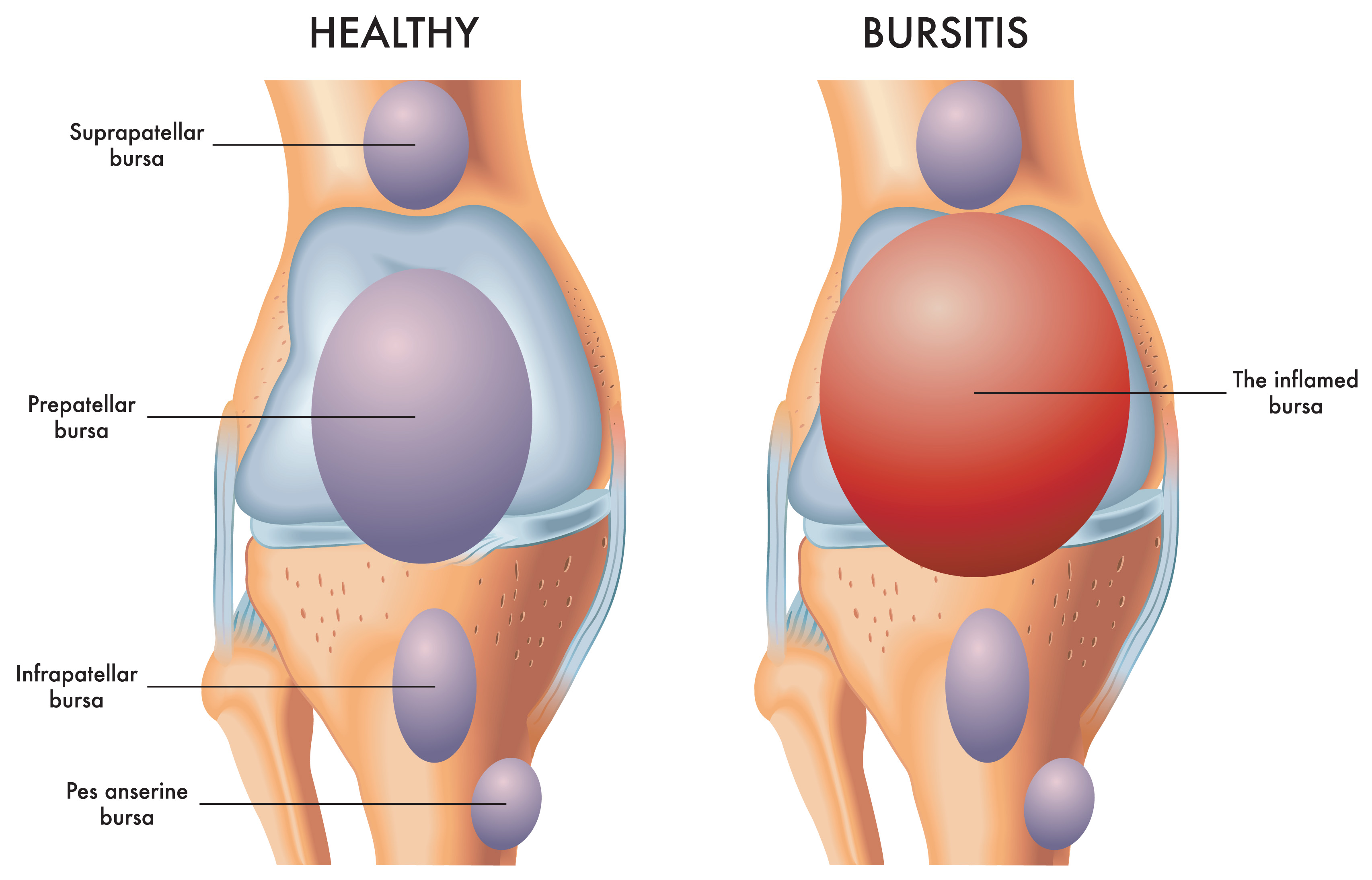
Bursas are small, fluid-filled sacs that cushion two body parts to move against each other. Joints, tendons, ligaments, muscles, and boney prominences have bursas to allow for smooth movement.
When a bursa becomes inflamed and swollen, it is known as bursitis. This often painful condition can be frustrating and may restrict mobility. But, bursitis is very treatable, and most people fully recover.
Symptoms
The most common sites of bursitis are the knee and elbow joints. However, bursitis can occur anywhere a bursa undergoes excessive stress. Common symptoms include:
- Pain when the area is touched or moved
- Achy or stiff joint
- Sudden change in the ability to move a joint
- Swelling or redness of the skin
Causes
Anything that irritates a bursa can cause bursitis. The bursas at joints are particularly vulnerable. The most common causes include:
- Overuse
- Repetitive stress
- Kneeling or leaning on the elbows for extended periods
- Injury
- Infection
- Trauma
Treatment
A majority of cases of bursitis will heal on their own. Early care can reduce pain and speed up a return to normal activity. Your doctor will likely recommend:
- Rest for the joint
- Protection from further overuse or trauma
- Ice to reduce swelling
- Over-the-counter anti-inflammatory pain medication
For more severe cases of bursitis, or those that do not respond to conservative treatment, your doctor may recommend further evaluation and treatment.
Prevention
If you had bursitis in the past or currently do activities that stress your joints, there are things you can do to reduce your likelihood of bursitis:
- Warm up before you exercise.
- Take regular breaks during repetitive activity.
- Use knee or elbow pads as a cushion.