Gut Check, Tips for Healthy Digestion
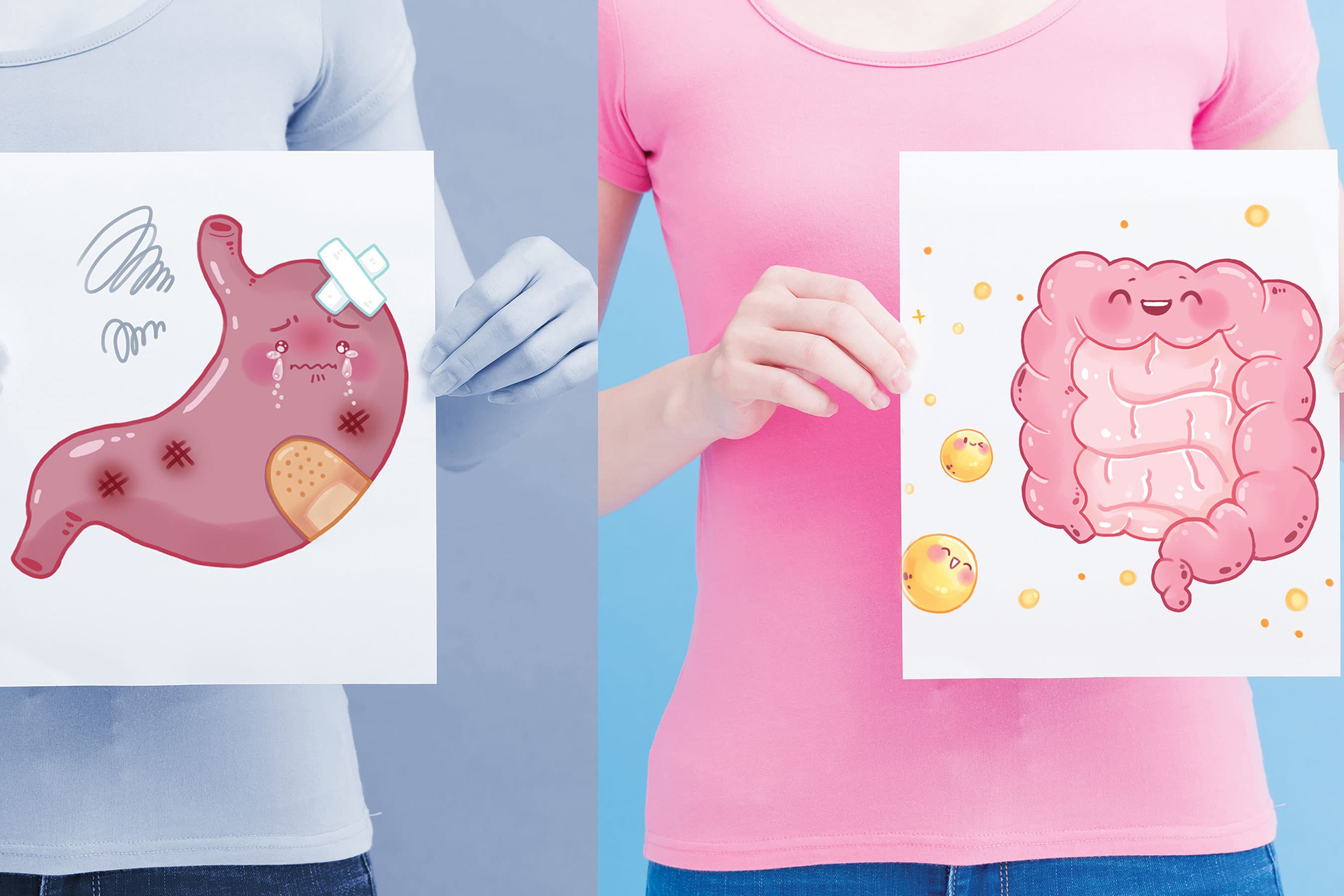
Your digestive system breaks down food and drinks into nutrients. These nutrients are used for energy, growth, cell repair and more.
Problems like constipation, diarrhea, nausea, heartburn and bloating can quickly sideline your day. Stomach ulcers, gastroesophageal reflux disease (GERD) and bowel problems like Crohn’s Disease can lead to more serious health issues too.
Help keep your digestion running as smoothly as possible.
Fiber is first
One of the best things people can do for better digestion is to eat more fiber. Getting enough fiber is needed to keep bowel movements regular.
A low-fiber diet can lead to constipation, which can make you feel sluggish and bloated. It can also stretch out the colon over time and lead to serious bowel problems, especially in older adults.
Get more fiber by eating foods like fruits, vegetables, beans and legumes and whole grains. Aim for 20-30 total grams of fiber each day. But, increase the amount slowly or you could have bloating and gas.
Drink plenty of water. Taking fiber without enough water can make constipation worse. And, dehydration in general isn’t good for digestion.
Talk to your doctor about a fiber supplement if you’re not having regular, soft bowel movements.
Eat less processed foods
Processed foods often contain very little fiber. Focus on eating whole vegetables and fruits, lean meats, poultry, beans, lentils, whole grains, nuts, seeds, and lower-fat dairy products. Avoid or limit added sugars, red meat and processed meats.
Some food additives may be linked to digestive problems. Research has shown that some may cause inflammation in the gut or may affect its healthy bacteria. Studies are ongoing about this.
Probiotics - do they work?
Probiotics, or friendly gut bacteria, may be helpful in some cases. But experts say we need to learn more about these supplements. There are many different kinds of probiotics and we don’t yet know which ones are the most helpful. Some foods like yogurt with live active cultures, kefir and fermented foods like miso also contain probiotics.
Ask your doctor before taking probiotic supplements.