HealthyLearn Site Navigation:
Online Clinic
Digestive & Urinary
Hiatal Hernia
November 1, 2024

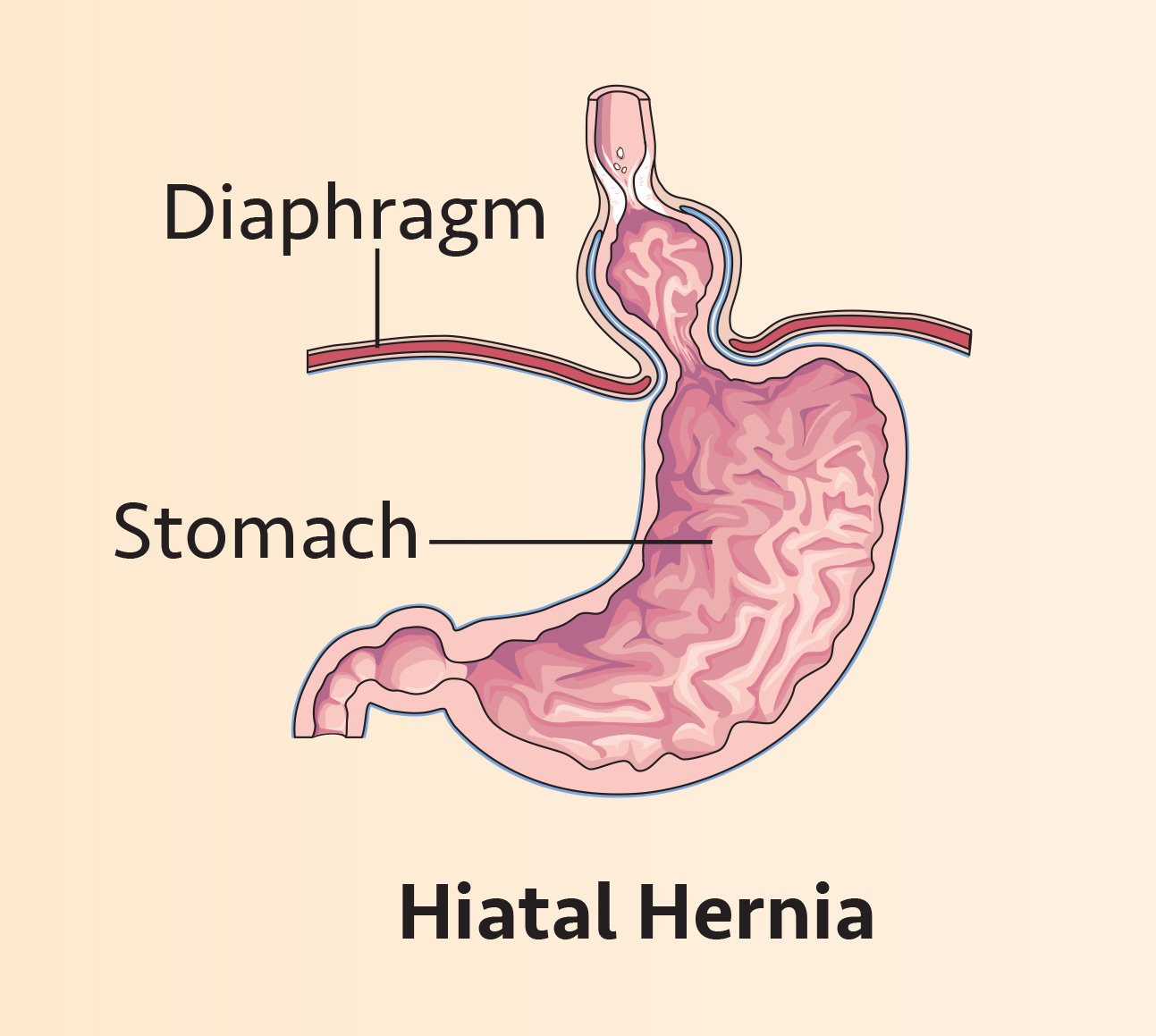
With a hiatal hernia, the normal action that closes off the top of the stomach does not work well. This can cause food or stomach acids to back up into the esophagus. This can cause gastroesophageal reflux disease (GERD).
Signs & Symptoms
Many people have no symptoms with a hiatal hernia. Others have one or more of these problems:
- Acid reflux. Stomach acid backs up into the esophagus.
- Chest pain. {Note: Don’t assume that chest pain is due to a hiatal hernia.}
- Pain in the esophagus. Heartburn.
- Hiccups. Belching after meals.
- A hard time swallowing.
Causes
The actual cause is not known. Risk factors are obesity, being a woman, or being middle aged. Smoking, lifting, strong coughing, and straining with bowel movements also increase the risk.
Treatment
Hiatal hernias are usually not serious problems. Often they can be treated with self-care. If not, surgery is an option.
Self-Care / Prevention
- Don’t smoke. If you smoke, quit.
- Get regular exercise. This helps keep abdominal muscles in shape.
- Lose weight if you are overweight.
- Eat 5 to 6 small meals a day instead of 3 larger meals.
- Avoid alcohol, caffeine, and spicy foods.
- Don’t lie down after eating. Wait 2 to 3 hours.
- Don’t strain to pass stool.
- If you take aspirin, ibuprofen, or naproxen sodium, take it with food.
- Raise the head of the bed 6 inches. Put 6 inch blocks under the legs of the head of the bed or put a 6 inch wedge between the mattress and box springs at the head portion. Don’t prop your head up with pillows. Doing this puts pressure on your stomach area and can help force acid up into the esophagus.
- Your doctor may recommend over-the-counter medicine to neutralize, reduce, or block stomach acid reduction. {Note: Read the labels before taking. Adverse side effects are more likely and more severe in older persons who take some acid controllers, such as Tagamet HB.}