HealthyLearn Site Navigation:
Online Clinic
Common Skin Conditions
Skin Conditions
ABC’s of Skin Care
August 18, 2026
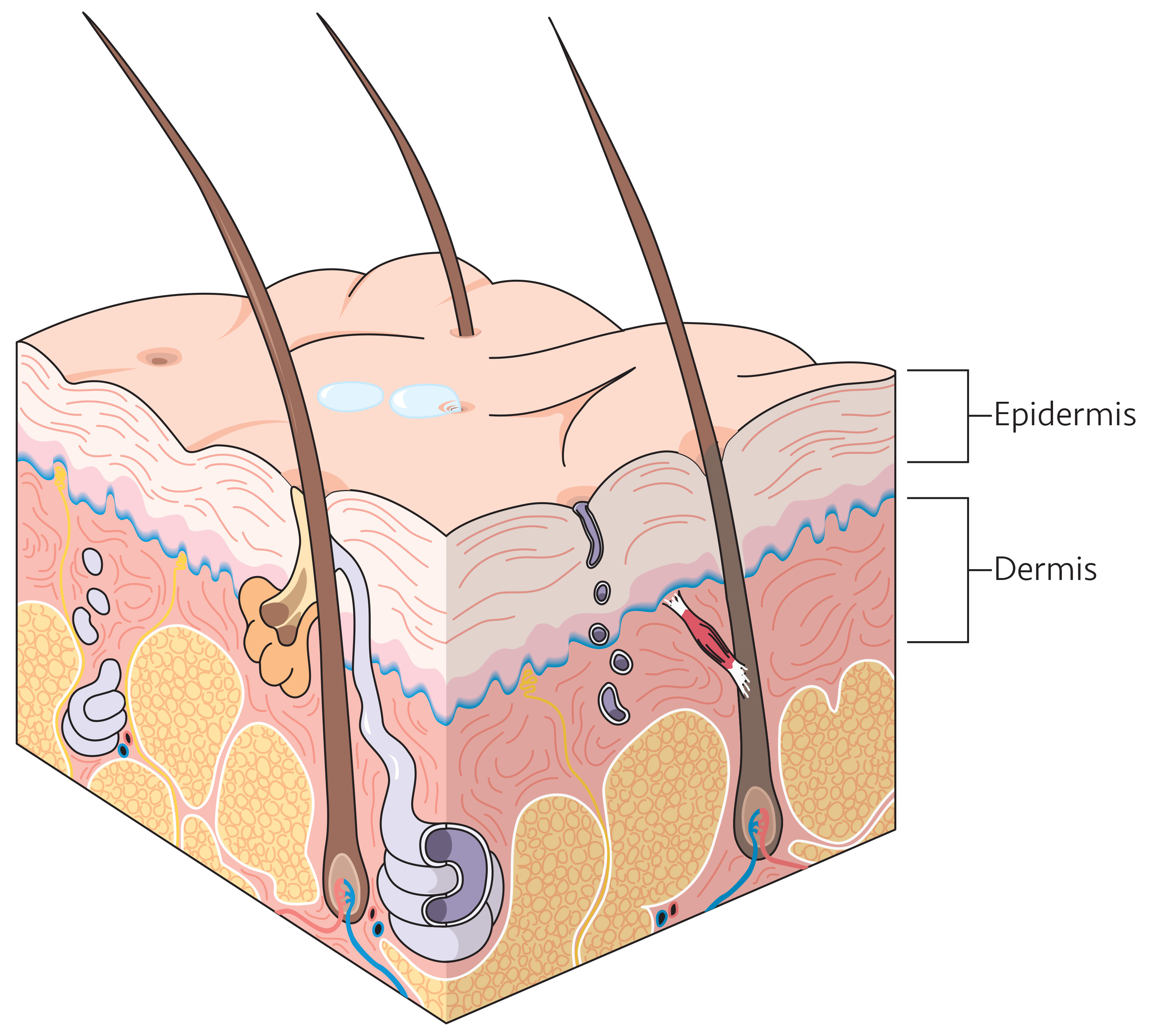
The skin has two basic layers. The outer, protective layer is the epidermis. The thicker, inner layer is the dermis.
About Your Skin
The skin is the body’s largest organ.
- It protects tissues inside the body from injury.
- It serves as a barrier against chemicals, germs, hot and cold weather, pollution, the sun, etc.
- It helps regulate body temperature. It seals in moisture.
Basic Skin Care
- Protect your skin from the sun’s harmful ultraviolet (UV) rays.
- Limit exposure to the sun, especially between 10 a.m. and 4 p.m.
- Wear a broad-spectrum sunscreen that has a sun protection factor (SPF) number of at least 30. Use one that protects you from both UVA and UVB rays. Apply sunscreen about 30 minutes before going outside.
- Wear protective clothing, such as long sleeves and a wide-brimmed hat.Don’t smoke. If you smoke, quit. Smoking can cause premature wrinkles.
- Don’t use tanning beds and heat lamps.
- Eat healthy foods. Drink plenty of water and other fluids.
- Clean your skin daily. Clean it when it gets dirty, too.
- Wash your skin with warm (not hot) water. Hot water dries the skin.
- Use mild or gentle soaps and cleaning products to prevent dry, irritated skin.
- Moisturize your skin daily. Dry, cracked skin lets harmful germs and other irritants in. Use moisturizers that don’t have alcohol.
- Protect your skin from the wind and cold weather. Wear gloves, a hat, a scarf, etc.
- Wear gloves when you garden, work with chemicals, etc. When shaving, soften the beard with a warm washcloth. Use plenty of shaving cream. With a sharp blade, shave in the direction of hair growth.
- Avoid items that cause allergic reactions and/or irritate the skin.
Cosmetic Safety
With so many products to choose from, how do you know which ones are safe to use? How do you know if they give the results they promote?
- If you have skin concerns or problems, consult your primary care doctor or a dermatologist.
- Follow directions on the label.
- Test a small amount of a new product on your skin to find out how your skin reacts to it.