HealthyLearn Site Navigation:
Online Clinic
Common Skin Conditions
Skin Conditions
Acne
August 18, 2026
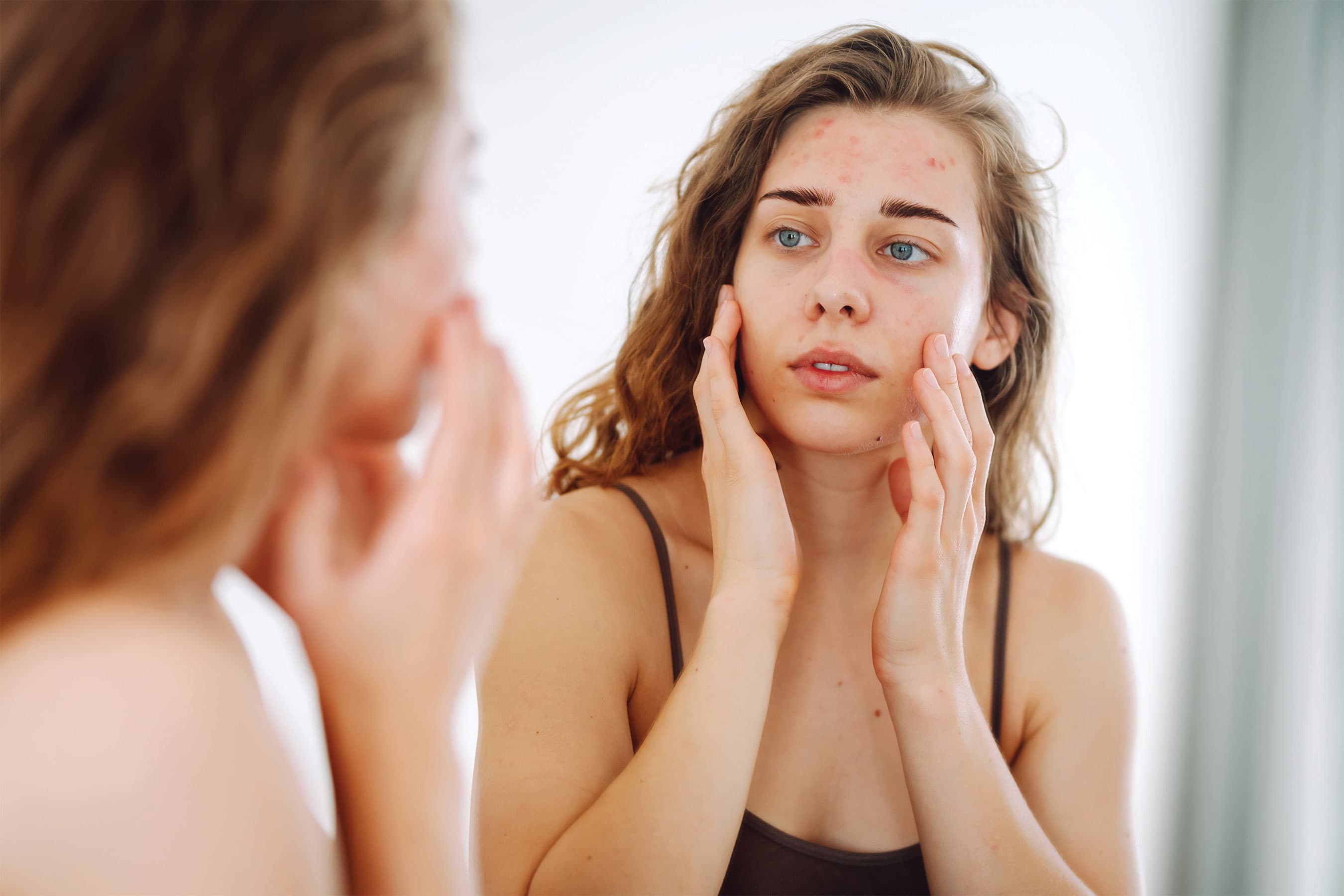
Acne is a common skin condition. It occurs most often in teenagers and young adults but can persist into adulthood.
Signs & Symptoms
- Whiteheads and/or blackheads
- Red and painful pimples
- Deeper lumps (cysts or nodules)
Causes
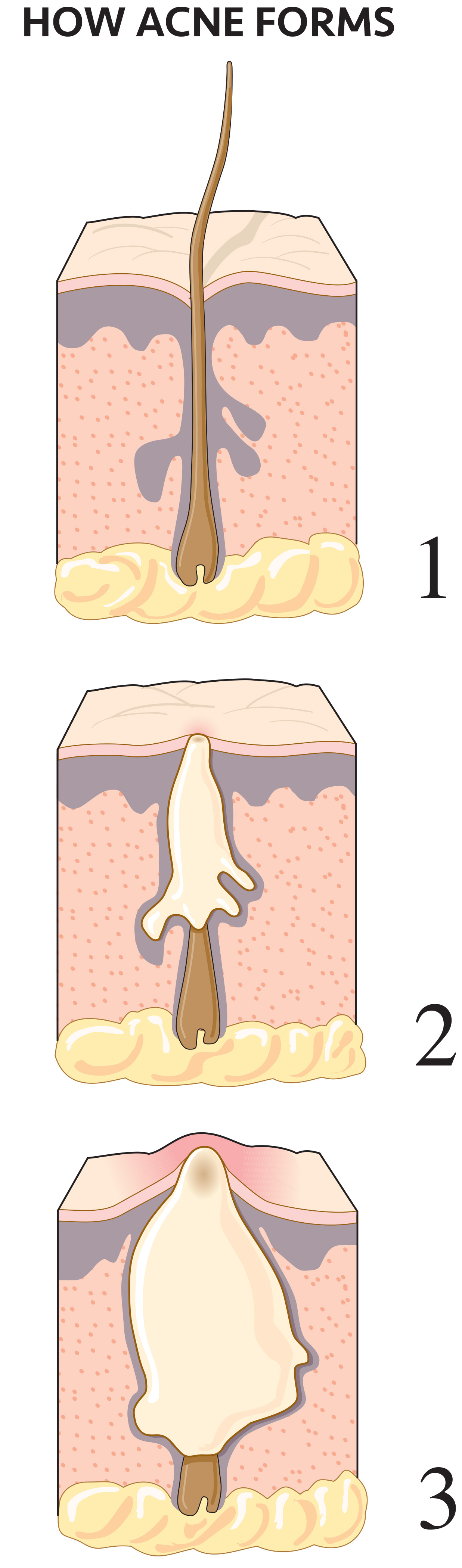
Acne results when oil ducts below the skin get clogged. Factors that help cause and/or worsen acne include:
- Hormone changes during adolescence, before a female’s menstrual period, or during pregnancy
- Rich moisturizing lotions. Oily makeup.
- Emotional stress
- Nutritional supplements that contain iodine
- Medications, such as lithium and corticosteroids
- Illegal (anabolic) steroids. These are used for muscle-building.
- Family history
- Too little sleep
- Sweating during exercising while wearing makeup and unclean clothing next to your skin
Foods and beverages, such as chocolate, nuts, greasy foods, and cola do not cause acne. If you find that eating certain foods make your acne worse, avoid them.
Treatment
Mild acne can be treated with self-care. When this is not enough, a doctor may prescribe one or more of these medications:
- A topical cream, gel, or liquid with retinoic acid (Retin-A). {Note: Retin-A makes your skin more sensitive to the sun.}
- A topical cream, lotion, or wipe with an antibiotic, such as clindamycin.
- A topical gel with dapsone. A brand name is Aczone™ Gel 5%.
- An antibiotic pill, such as minocycline or tetracycline. {Note: These medicines can make birth control pills less effective and make your skin more sensitive to the sun.}
- For some females, a certain birth control pill.
- Isotretinoin. Brand names are Amnesteem, Sotret, Claravis. This medicine is usually prescribed for severe acne. {Note: This medicine can have serious side effects. These include bone and fracture problems, severe birth defects, depression, psychosis, aggressive and/or violent behaviors, and suicide.}
Treatments Other Than Medications