Bleeding While Pregnant
Pregnant women sometimes have light spotting. That’s when a tiny bit of blood leaks from the vagina or the surface of the cervix. It may happen after a vaginal exam. It may also happen after sex.
Bleeding can be a sign of a problem if:
- The blood is bright red.
- Pain or cramps are present, too.
- The bleeding is heavy. Heavy means the bleeding soaks a sanitary pad.
- The spotting keeps going on.
If the blood starts out pink or red and turns dark brown, it is not active bleeding. This is not usually a problem. But let your health care provider know when there is any bleeding.
Causes
Before the 20th week, bleeding could be, but is not always, a sign of miscarriage. Other causes of bleeding include:
- Loss of the mucus plug
- Kidney infection
- Preterm labor
- Placenta previa and other problems called vasa previa and marginal previa
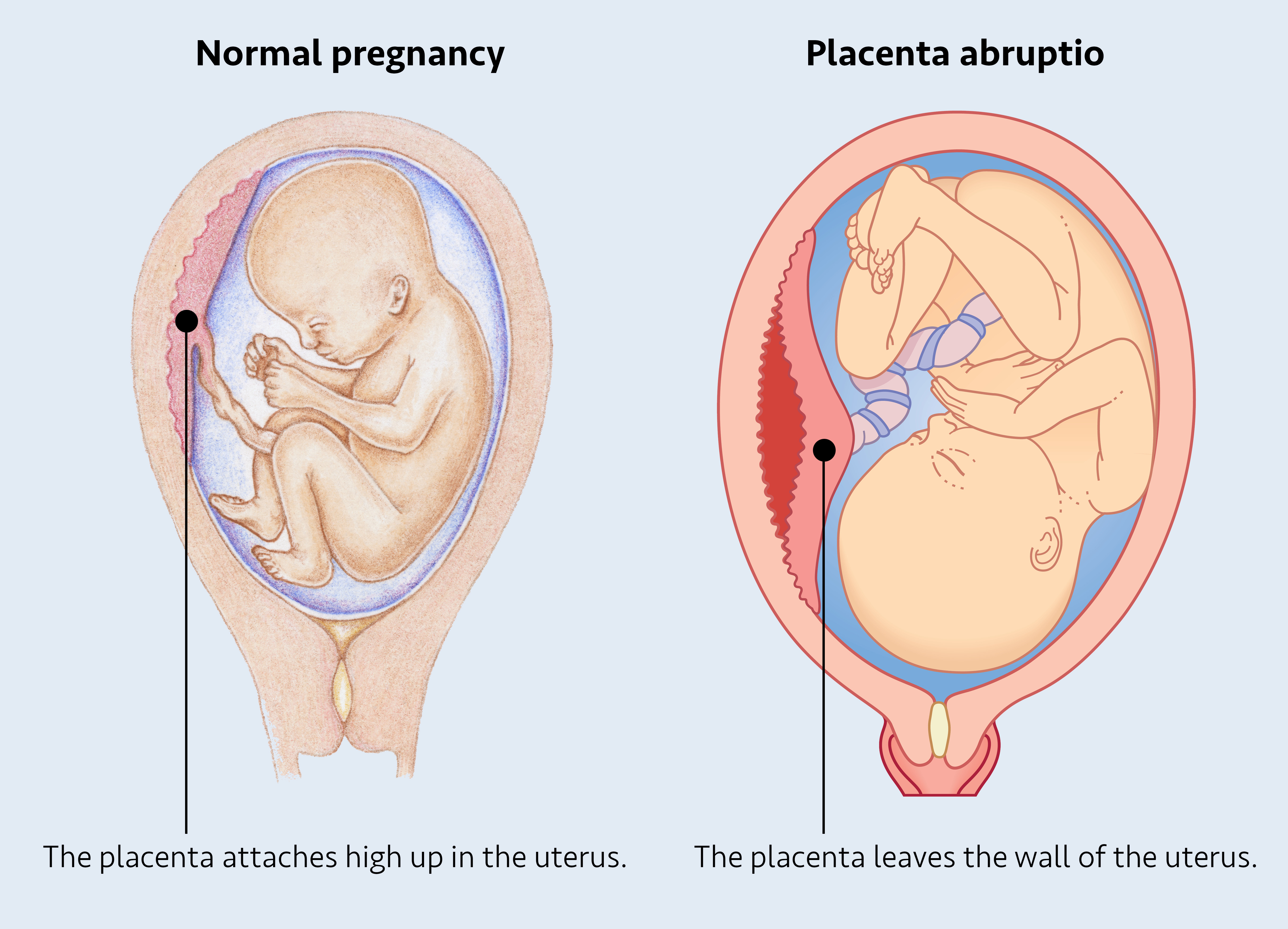
- Placenta abruptio
- Swollen cervix
Placenta Previa
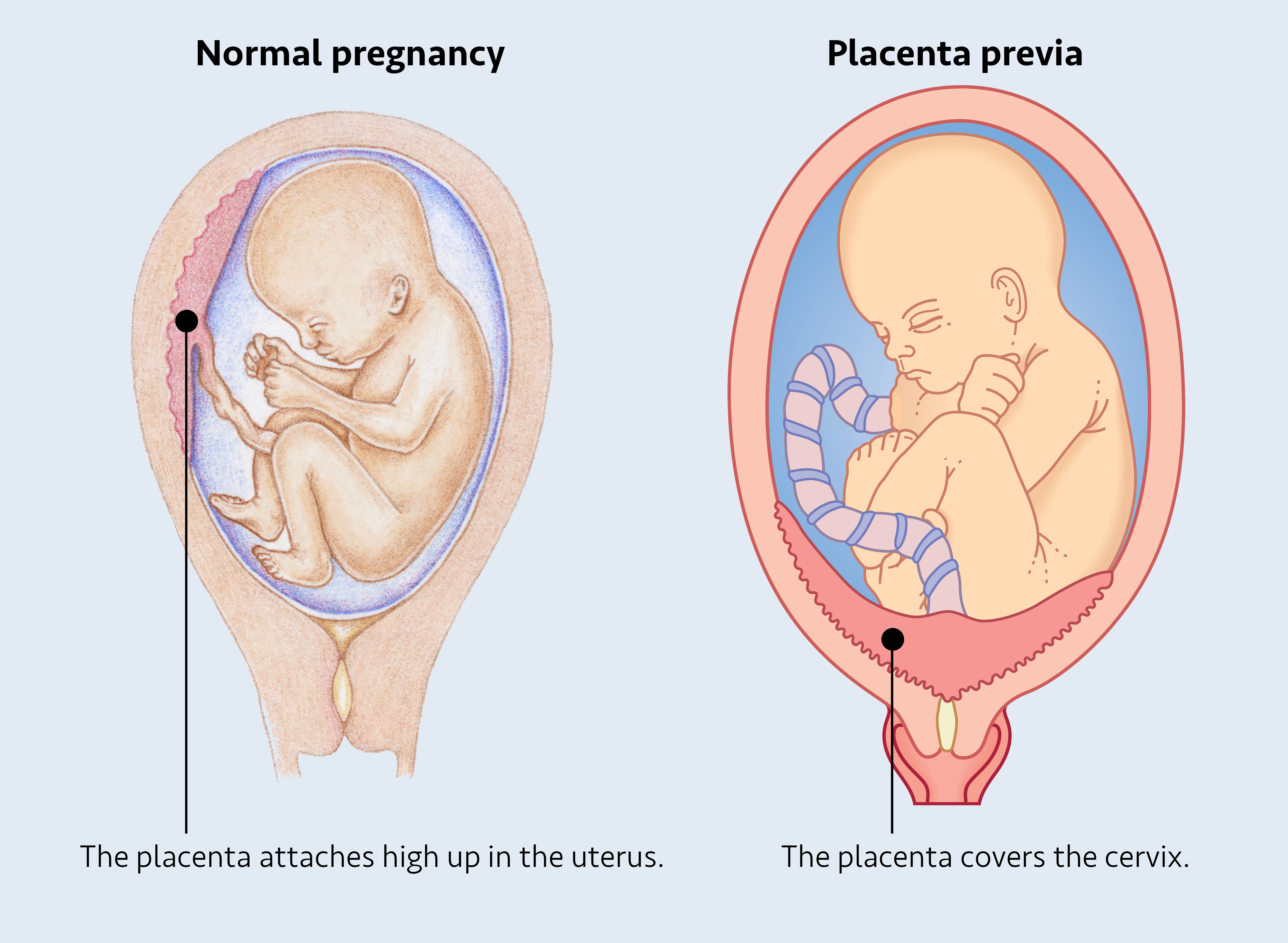
The placenta carries oxygen and food to the baby. In most pregnancies, the placenta attaches high in the uterus. In placenta previa, it attaches low, over the cervix. The lower uterus stretches during late pregnancy. Parts of the placenta tear from the wall. That causes bleeding.
Placenta previa is rare. It happens in only 1 in 200 pregnancies. Its cause is not known. Falls and injuries are not factors.
Symptoms of placenta previa:
- Bright red vaginal bleeding. This could start as early as the 24th week. Often, it starts during the 34th or 35th week.
- Usually, there is no pain or cramping.
A woman may not know that she has placenta previa until bleeding happens. Then an ultrasound test can show the problem.
Women with placenta previa have to spend a lot of time in bed. It prevents stress to the uterus. The goal is to keep blood loss down. A lot of blood loss means danger for both mother and baby. In severe cases, the mother may have to go to the hospital for treatment.