Ectopic Pregnancies

An ectopic pregnancy is when an embryo starts to develop outside the uterus. (Ectopic means out of place.) This happens less than 2 percent of the time.
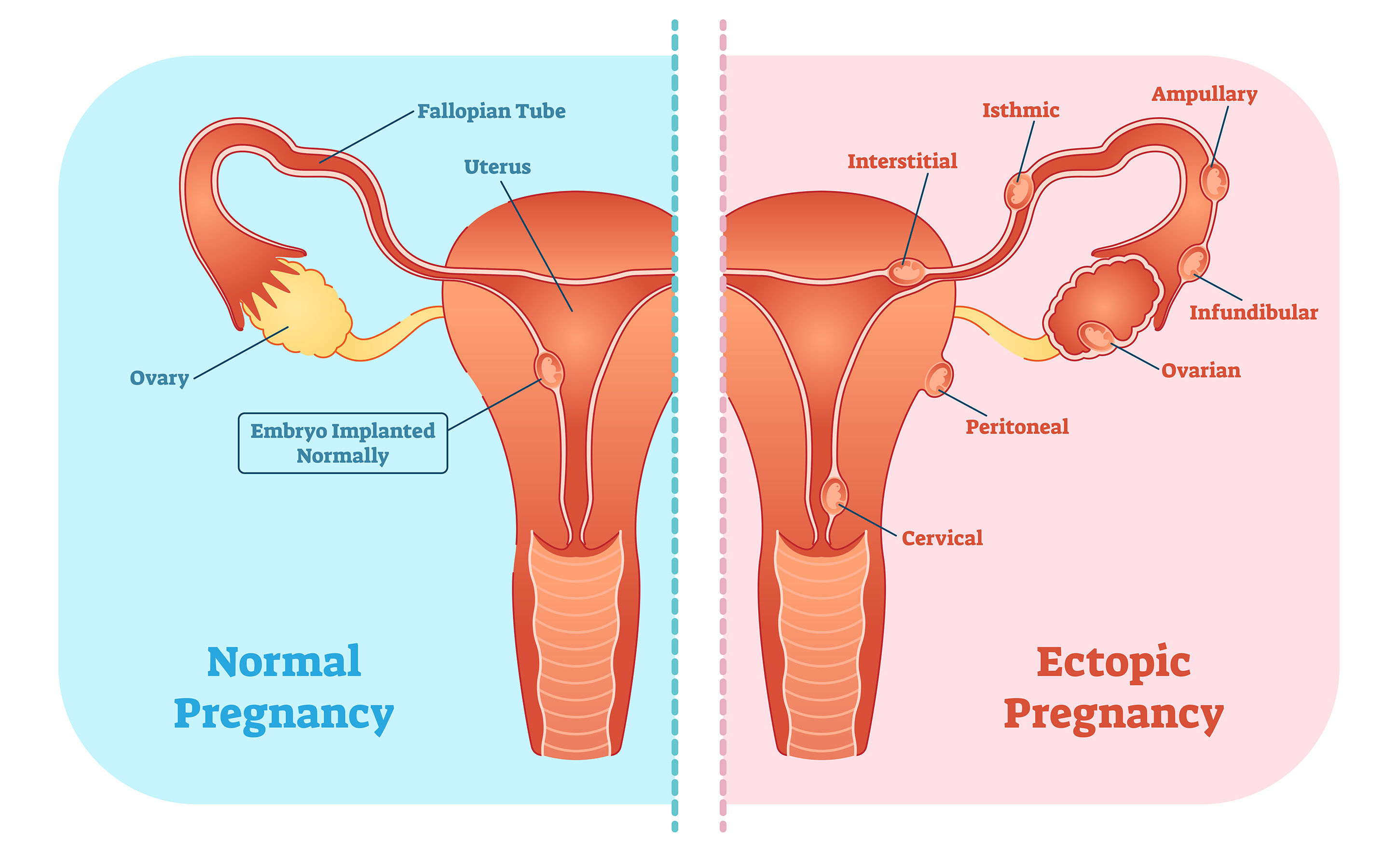
In normal pregnancies, an egg travels from a woman’s ovary to the uterus. It travels down the fallopian tube to get there. Somewhere along the way, the egg gets fertilized by a male sperm. Once inside, the egg attaches to the wall of the uterus. It becomes an embryo and then a fetus. Nine months later, a baby is born.
In ectopic pregnancies, the fertilized egg does not reach the uterus. It starts to grow somewhere else. Most often, that’s in the fallopian tube.
The embryo can’t survive for long outside the uterus. But it can put the mother in danger if it gets too big. It can rupture an organ or cause internal bleeding. Medical steps must be taken right away.
Symptoms
Some women may have no symptoms. They may not even know that they are pregnant. When there are symptoms, they usually come within 8 weeks of conception.
Symptoms may include:
- Pain in the lower belly
- Pain on one side of the body
- Vaginal spotting and bleeding
- Pain in the rectum (rear end) or shoulder
- Feeling like throwing up
- Throwing up
- Feeling weak
- Fainting
Diagnosis
Ultrasound can sometimes locate the embryo. Laparoscopy is another option. That’s when a tiny camera with a light is put in the mother's body. It goes in through a very small incision (cut).
Causes
There are many causes for ectopic pregnancies:
- Damage to the ovary or fallopian tube
- Scarring of the ovary or fallopian tube. Scarring can result from endometriosis, pelvic inflammatory disease or an STI.
Also, the risk for an ectopic pregnancy is higher for women who:
- Have had an ectopic pregnancy in the past
- Have had fallopian tube surgery
- Have had problems getting pregnant
- Have used an IUD for birth control