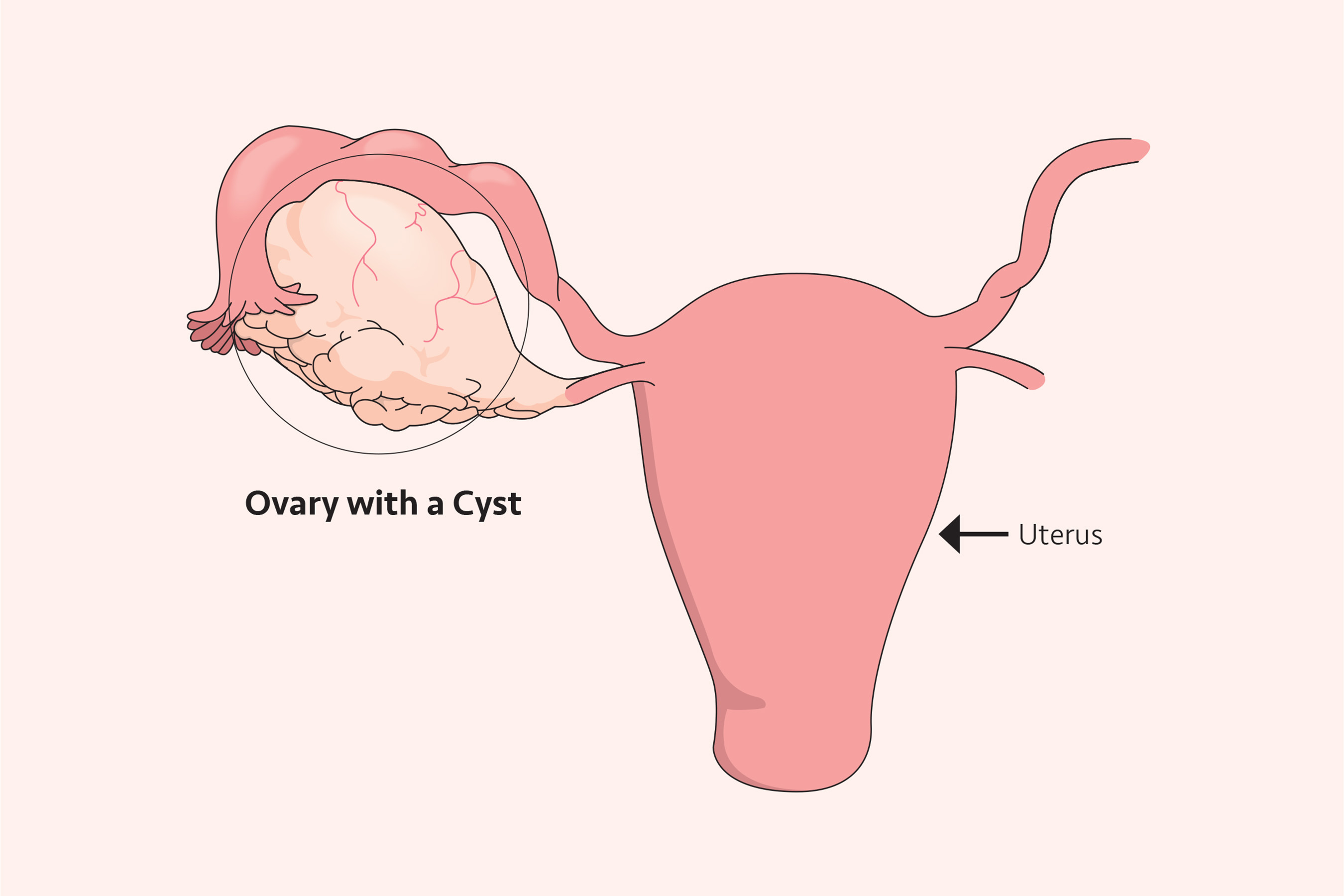
The ovaries are two almond-sized organs. One is found on each side of the uterus. Growths called cysts or tumors can form in, on, or near the ovaries.
Cysts are sacs filled with fluid or semisolid matter. Ovarian cysts are common in women before menopause. These cysts rarely develop into cancer.
Tumors are solid masses. Most often, tumors in the ovary are benign. Malignant tumors are ovarian cancer. This type of cancer occurs most often after menopause, with half of all cases found in women ages 63 and older. It can occur at other ages, too.
Signs & Symptoms
Ovarian Cysts
When symptoms occur, they include:
A feeling of fullness or swelling of the abdomen.
Unexplained weight gain.
A dull, constant ache on either or both sides of the pelvis.
Pain during sex.
Delayed, irregular or painful periods.
Problems emptying the bladder or bowel completely.
A cyst that bleeds, breaks or twists can cause sharp, severe abdominal pain, fever and vomiting.
Ovarian Cancer
In many cases, the cancer has spread by the time it is found. When symptoms appear, they are vague problems and are often ignored. These symptoms, even in early-stage ovarian cancer, last almost daily for more than a few weeks:
Bloating.
Pain in the abdomen or pelvis.
Difficulty eating or feeling full quickly.
Urgent need to pass urine or passing urine often.
Other symptoms can include:
Back pain, pain with intercourse.
Constipation, indigestion.
Fatigue.
Menstrual irregularities.
Causes
Ovarian Cysts
Some cysts are due to normal changes in the ovaries.
Some cysts result from cell growth. Most of these are benign, but need medical treatment. Examples are:
Dermoid cysts. These are growths filled with many types of tissue. Examples are fatty material, hair, teeth, bits of bone, and cartilage.
Polycystic ovaries. These are caused by a buildup of multiple small cysts from hormone problems. Irregular periods, body hair growth, and infertility can result.
{Note: Taking hormones does not cause ovarian cysts.}
Risk Factors
Ovarian Cysts
Being between the ages of 20 and 35.
Endometriosis, pelvic inflammatory disease (PID), the eating disorder bulimia.
Obesity.
Ovarian Cancer
Increasing age.
Not having children or having children at an older age.
Not ever taking birth control pills.
Menopause after age 55.
Family history of ovarian, colon, breast, prostate or lung cancer.
Personal history of breast, uterine, colon or rectal cancer.
Being Caucasian.
Hormone therapy after menopause.
Treatment
Growths on ovaries are diagnosed with a pelvic exam and medical tests. Ways to detect growths include yearly pelvic and rectal exams and an ultrasound. No completely reliable test exists for ovarian cancer. A CA-125 blood test can detect the progression of ovarian cancer. It is not a reliable screening test.
Ovarian Cysts
Treatment depends on the size and type of cyst(s), how severe symptoms are, the woman’s health status, and her desire to have children.
Some cysts resolve without any treatment in 1 to 2 months. For others, hormones in birth control pills may suppress the cyst. Sometimes, surgery may be needed to remove it. The ovary and fallopian tube may need to be removed, too.
Ovarian Cancer
The sooner the cancer is found and treated, the better the chance for recovery. Treatment includes:
Surgery. The ovaries, uterus and fallopian tubes are removed. If the cancer has spread, the surgeon removes as much of the cancer as possible.
Chemotherapy.
Radiation therapy.
Hormone therapy.
Clinical trials.
Self-Care / Prevention
Ovarian Cysts
Limit caffeine.
Have regular pelvic exams, as advised by your doctor.
Take an over-the-counter medicine for pain as directed.
Ovarian Cancer
Medical care, not self-care, is needed. Follow your doctor’s advice.
Ask your doctor for advice if you have a family history of ovarian cancer.
For More Information:
Office on Women’s Health womenshealth.gov
diagnosis
Triage Questions
Question 1
Do you have very severe abdominal pain, a fever, and vomiting?