HealthyLearn Site Navigation:
Online Clinic
Bone & Muscle
Fibromyalgia
July 6, 2026

Fibromyalgia is a chronic, arthritis-like illness. It affects the muscles, not the joints.
Signs & Symptoms
- Chronic widespread pain on both sides of the body. This lasts for at least 3 months. Muscle pain can be severe.
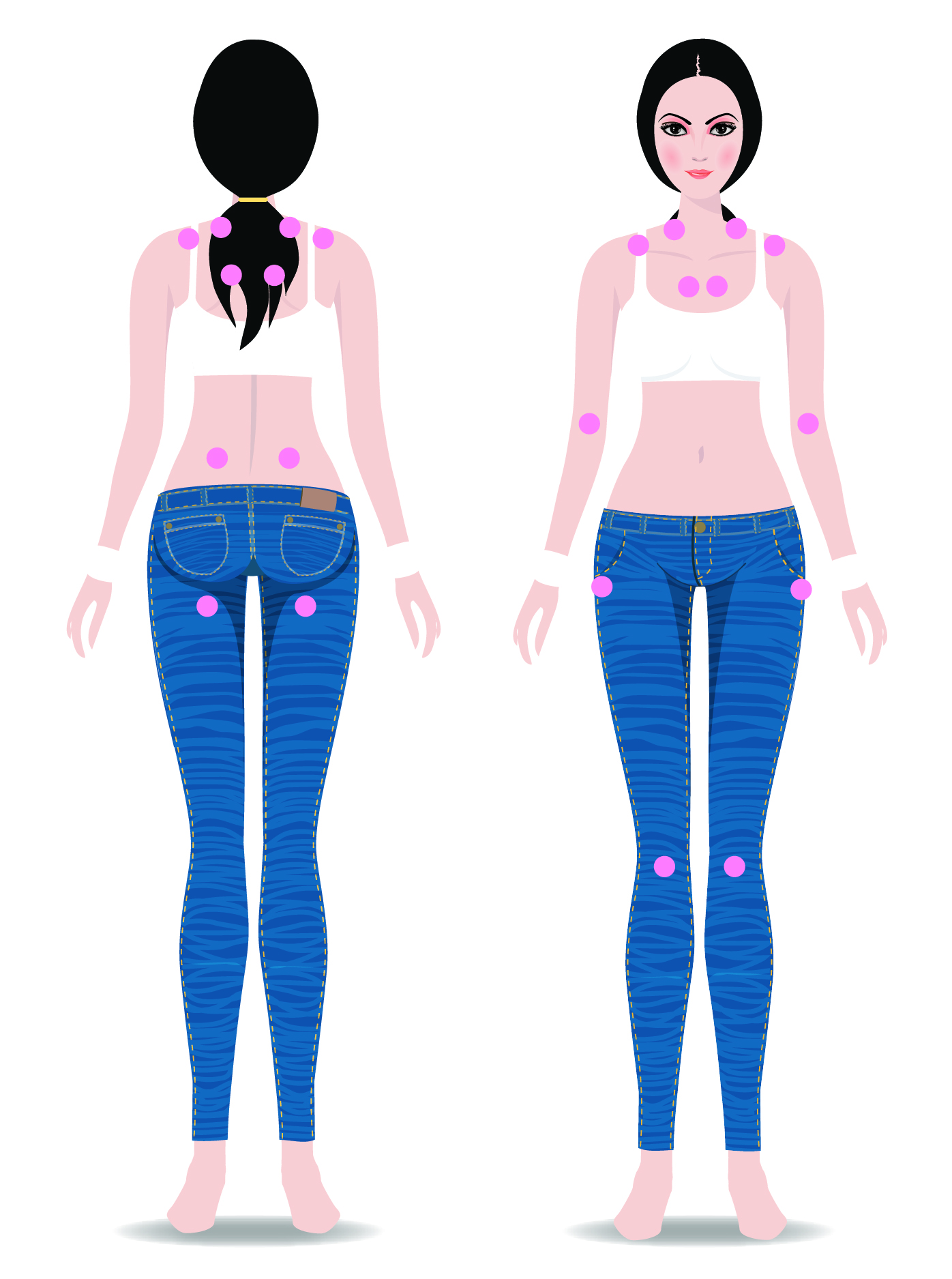
- Pain in 11 or more of 22 “tender points.”
- Fatigue. Disturbed sleep. Anxiety. Depression.
- Memory lapses. Problems concentrating. Feeling confused.
- Chronic headaches. Jaw pain. A tingling feeling in the limbs.
- Irritable bowel. Swelling and pain in the abdomen. Gas. Constipation. Diarrhea.
Tender Points of Fibromyalgia
Causes
The exact cause is not known. Factors to play a role include:
- An illness caused by an infection. Emotional or physical trauma.
- Hormones. Women are affected more often than men.
- Heightened sensitivity to pain
- Family history
Treatment
- Movement and exercise therapies. May include physical therapy.
- Medication to manage pain and other symptoms, or antidepressants to treat certain symptoms or to prevent flare-ups.
- Massage therapy
- Cognitive behavior therapy to learn strategies to manage pain, stress, negative thoughts, and depression
- May include complementary therapies, such as acupuncture or myofascial release therapy
Self-Care
- Follow the treatment plan advised by your doctor.
- Reduce stress. Use relaxation techniques.
- Get enough sleep.
- Take warm baths. Apply heat. Massage sore muscles.
- Get regular physical activity.
- Manage your energy levels. Rest when you need to.