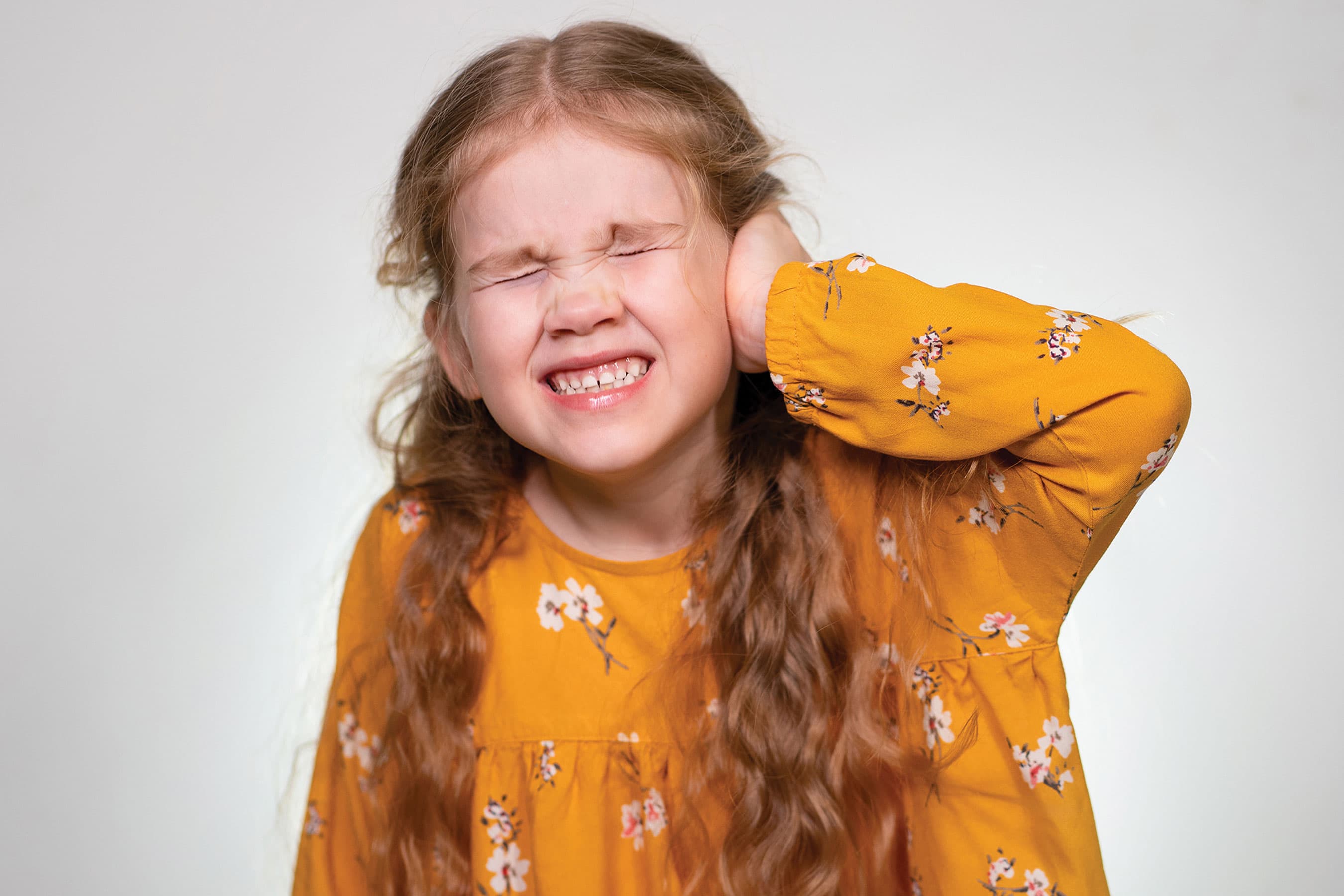
An earache is when the ear hurts. Children get earaches a lot. They get them most often between 6 months and 2 years old. But earaches can be a problem up to age 10. The pain can be minor or very bad.
Causes
Earaches are a sign that something is wrong. The most common cause of an earache is plugged Eustachian tubes. These tubes go from the back of the throat to the middle ear. Most earaches in children come from infections in the middle ear. They happen a lot after a cold or other infection in the head or throat. Here are some other things that can cause earaches:
Changes in air pressure on a plane
Something stuck in the ear, including hard ear wax
Tooth problems. Ear injuries.
Allergies
Your child’s doctor should treat very bad ear pain. They may tell you to give your child acetaminophen or ibuprofen. Make sure you give the right kind and dose for your child’s weight. The doctor may also have you give your child medicines to dry up or clear a blocked ear. Let the doctor decide if an antibiotic is needed.
You can use self-care on your child if the pain isn’t bad, and if there are no other symptoms. One example is a mild case of “swimmer’s ear.”
Prevention
Don’t put things in your child’s ears like cotton swabs, bobby pins, or your fingers. You can hurt the eardrums.
Don’t smoke. Don’t let your child smoke. Keep your child away from secondhand smoke.
Make sure your child gets in the habit of washing their hands, especially after playing around other kids.
Avoid giving a bottle to a baby when they are lying down.
Fever. Very bad headache.
Stiff neck
Acts very sleepy and/or strange
Purple or red, bumpy skin rash that does not fade when you press on the skin
Pulling, touching, or tugging the ear over and over
Fever. An ear that is hot and hurts when you touch it.
Sticky, green, or bloody mucus drains from the ear
Crying that won’t stop
Acting irritable and restless, especially at night or when lying down
A mild injury to the ear or head
Your child blew his or her nose hard or many times.
Something is stuck in your child’s ear and you can’t take it out safely.
Your child had a cold, sinus, or respiratory tract infection.
Your child went swimming, and now the ear hurts a lot when you touch the ear lobe.
Your child was in a very noisy place, like a music concert or a place with heavy machines.
Self-Care
Help with Pain
Put a warm washcloth next to the sore ear. Or put an ice bag or ice in a wet washcloth over the ear for 20 minutes.
Give your child acetaminophen or ibuprofen. Make sure you give the right kind and dose for your child’s weight. (Note: Do not give aspirin. Aspirin and other medicines that have salicylates have been linked to Reye’s Syndrome.)
Open Up Eustachian Tubes
Sleep with head raised
Yawn. Yawning moves the muscles that open the tubes.
Hold nose closed and have your child blow gently through the nose until they hear a pop. This can be done many times a day.
Stay awake during airplane take-offs and landings. (If your child is an infant, nurse or bottle-feed as the plane takes off, gets ready to land, and when it lands.)
Chew gum or suck hard candy. Only let your child do this if they are more than 5 years old.
Use a cool-mist vaporizer, especially at night. Clean it every day.
Give your child lots of liquids to drink.
Hold a baby upright when you bottle feed.
Swimmer’s Ear
Swimmer’s ear is when you get water stuck in your ears after swimming. This can lead to an infection. To treat this:
Have your child shake his or her head.
Dry the ear canal with a tissue. Twist each corner of the tissue into a tip. Stick each tip into the ear canal for 10 seconds. Use a clean tissue on the other ear.
Use a product like Swim-Ear®. Drop it into the ears to fight the infection.
Don’t let your child swim in dirty water. Have your child wear a bathing cap when they swim.
Get a Bug Out of the Ear
Put the child in a dark room. Shine a light near the ear for a few minutes. (The bug may fly out.)
Pour a little warm vegetable oil, baby oil, or mineral oil in the ear to make the bug float out. Pull the earlobe gently back and up as you pour. If this doesn’t work, try flushing the ear with an equal parts mixture of hydrogen peroxide and water, or rubbing alcohol and water to rinse the ear out. If the bug still won’t come out, call your child’s doctor.
No
Yes
No
Yes
Earaches in children
No
Yes
No
Yes
Earaches in children
Triage Questions
Question 1
With the earache, does your child also have 1 or more of these signs of meningitis?