Cataract

Cataract is a cloudy area in the lens or lens capsule of the eye. It blocks or distorts light entering the eye. Vision gradually becomes dull and fuzzy, even in daylight. If cataracts form in both eyes, one eye can be worse than the other, because each cataract develops at a different rate.
Side View of the Eye
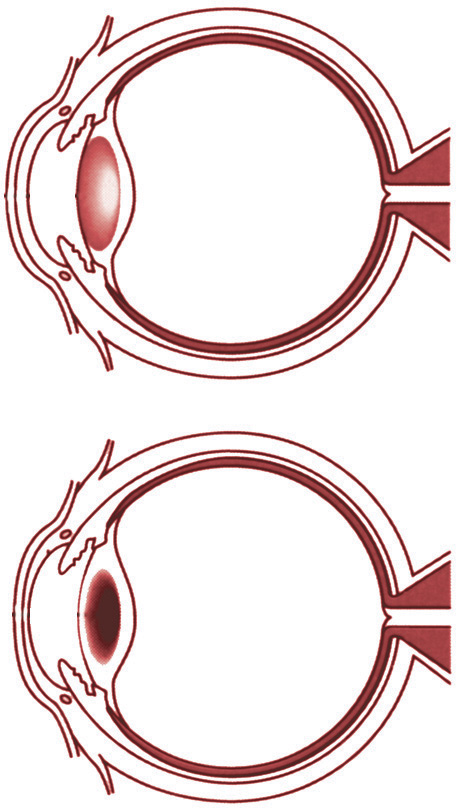
Signs & Symptoms
- Cloudy, fuzzy, foggy, or filmy vision.
- Pupils (normally black) appear milky white.
- Frequent changes in eyeglass prescriptions. Better near vision for a while, but only in far-sighted people.
- Sensitivity to light and glazed nighttime vision. This can cause problems when driving at night.
- Blurred or double vision. Changes in the way you see colors.
- Seeing glare from lamps or the sun. Halos may appear around lights.
Vision with Cataracts

Causes
- The most common form of cataracts come with aging due to changes in the chemical state of lens proteins. More than half of Americans have a cataract by age 80.
- Cataracts can also result from damage to the lens capsule due to trauma; from the sun’s ultraviolet rays; from radiation treatment for cancer; from taking corticosteroid medicines for a long time; and from chemical toxins. Smokers have an increased risk for cataracts. So do persons with diabetes and glaucoma.
Treatment
Treatment includes corrective lenses, cataract glasses, and cataract surgery, when needed.
A person who has cataract surgery usually gets an artificial lens at the same time. Often, a plastic disc called an intraocular lens (IOL) is placed in the lens capsule inside the eye.
It takes a couple of months for an eye to heal after cataract surgery. Experts say it is best to wait until your first eye heals before you have surgery on the second eye if it, too, has a cataract.
Self-Care / Prevention
There are no proven ways to prevent cataracts. General strategies to promote healthy eyes include the following: