Angina
© American Institute for Preventive Medicine. All Rights Reserved. HealthyLife.com
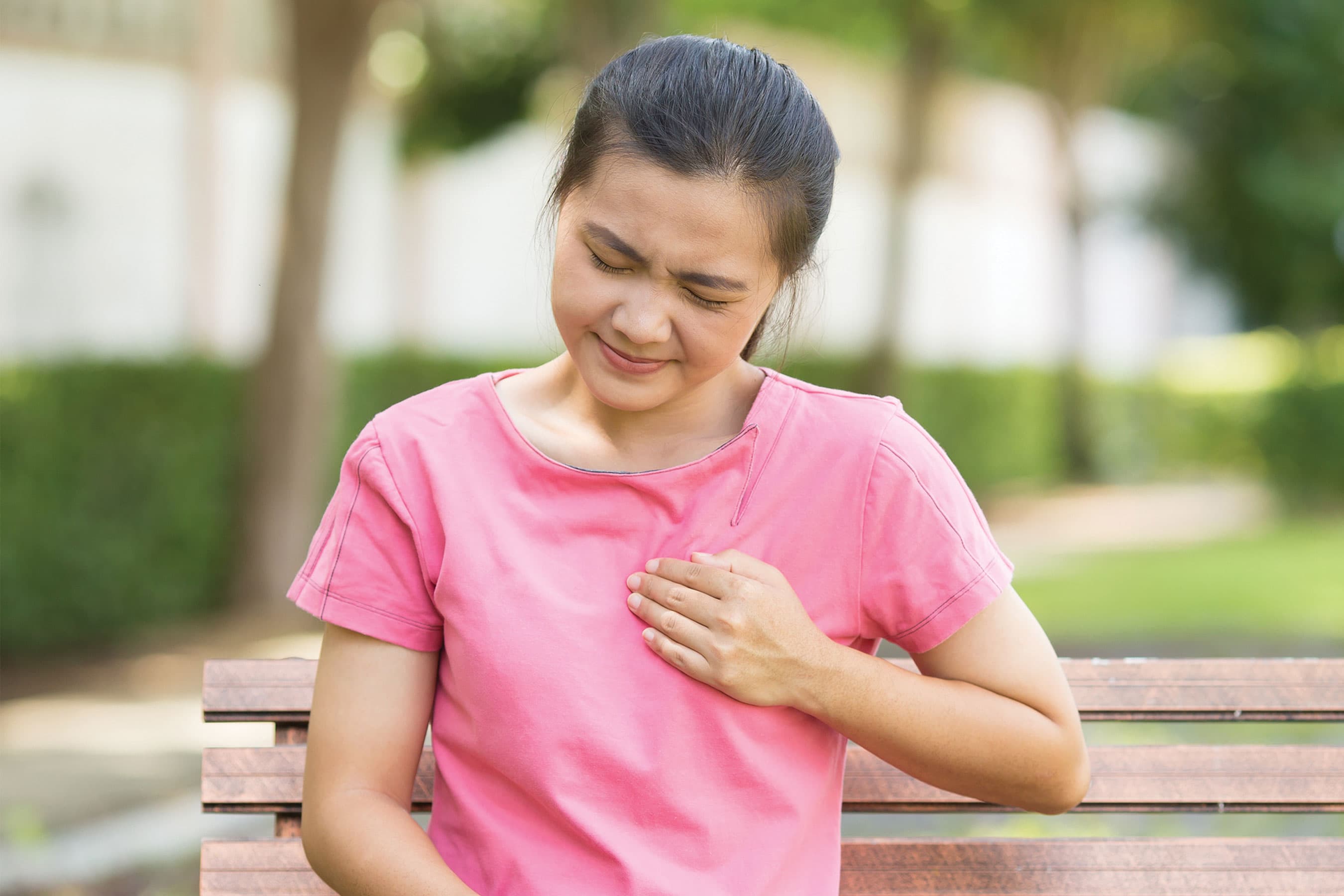
Angina is chest pain or discomfort. It occurs when the heart muscle does not get as much blood and oxygen as it needs for a given level of work.
Signs & Symptoms
- Squeezing angina. Pressure, heaviness, or mild ache in the chest (usually behind the breastbone)
- Aching into the neck muscles, jaw, one or both arms, or back
- A feeling of gas in the upper abdomen and lower chest
- A feeling that you’re choking or shortness of breath
- Paleness and sweating
- Nausea and vomiting
- It is more common for women to feel angina pain in the arms, neck, back, and jaw as well as shortness of breath, nausea, and lightheadedness.
Many people who experience angina for the first time fear they’re having a heart attack. A heart attack damages or injures the heart muscle. Angina does not. Pain from angina is a warning sign that a heart attack can occur, though.
Causes, Risk Factors & Care
Angina is caused by blocked or narrowed blood vessels that supply blood to the heart.
Triggers for angina include emotional stress, being in very cold weather, smoking, and heavy meals. Exertion or heavy physical work, hurrying up the stairs, or walking rapidly uphill can also bring on an angina episode.
If you have angina, your doctor or a cardiologist should follow you closely. They may prescribe:
- Medications, such as nitroglycerin, beta- blockers, calcium channel blockers, statins, and a low- dose daily aspirin
- Daily physical exercise specific for you
- Surgery, such as angioplasty or bypass surgery
Self-Care
Medical care is needed to treat angina. If you have angina, these self-care measures can be part of your treatment plan.
- Follow a heart-healthy diet that includes plenty of vegetables, fruit, whole grains, beans and lentils, and healthy fats. Limit saturated fats, trans fats, and sugary foods and drinks.
- Don’t smoke. If you smoke, quit.
- Eat 5 to 6 small meals a day.
- Reach and keep a healthy weight.
- Follow exercise recommendations from your doctor.
- After you eat, rest or do a quiet activity.
- Minimize exposure to cold, windy weather.