Home Blood Pressure Monitoring
© American Institute for Preventive Medicine. All Rights Reserved. HealthyLife.com
© American Institute for Preventive Medicine. All Rights Reserved. HealthyLife.com
Blood pressure is the force of blood pushing against the walls of your arteries. Each time your heart beats, it pumps blood throughout your body. The pressure of this blood flow is your blood pressure.
Importance of at-home monitoring
Monitoring your blood pressure (BP) at home is an important part of managing your health, especially if you have high blood pressure or are at risk of developing it. Set blood pressure goals with your doctor. Regularly checking your blood pressure lets you track changes over time and identify potential problems early. Early detection and treatment of high blood pressure can help prevent serious health complications, such as heart disease, stroke, and kidney failure.
Monitoring your blood pressure at home empowers you to take charge of your health.
- Clinical accuracy: Visit validatebp.org to see if your home BP monitor is listed as a validated BP device for clinical accuracy by an independent physician review committee.
- Preparation: For 30 minutes before, avoid smoking, caffeine, and alcohol. Empty your bladder and relax for at least 5 minutes.
- Taking measurements: Take two readings at each session, one minute apart. Record the date, time, and both readings.
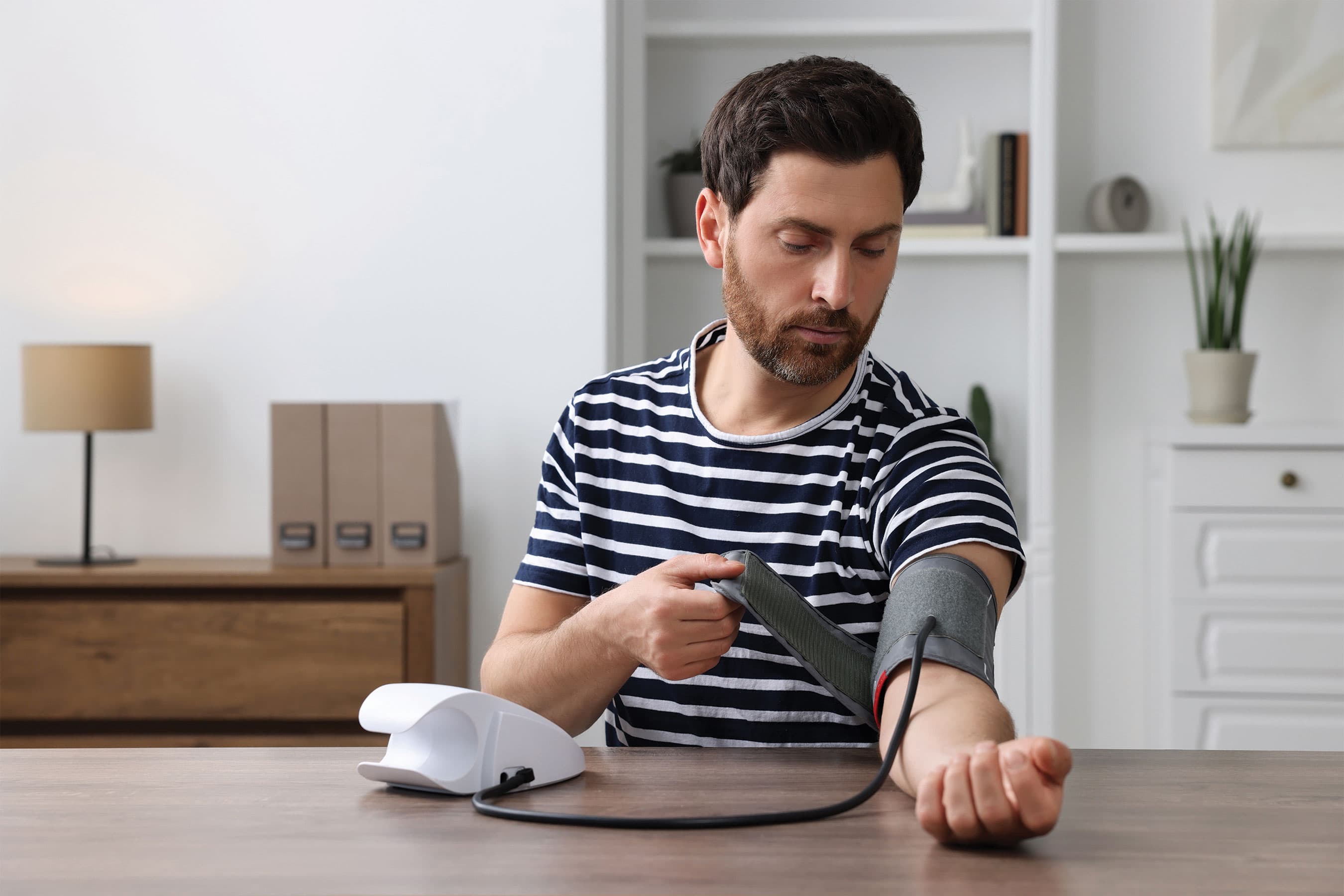
- Proper technique: Sit with your back supported and your feet flat on the floor. Wrap the cuff on your upper arm, positioned slightly above your heart.
- Seeking help: If you see consistently high readings, talk to your doctor about your results and discuss treatment options.
Tip: Once you purchase your monitor, bring it to your next health appointment. They will check to see that you are using it correctly and get the same results as the equipment in their office.