HealthyLearn Site Navigation:
Online Clinic
Mature Health
Make the Most of Mealtime
June 3, 2024
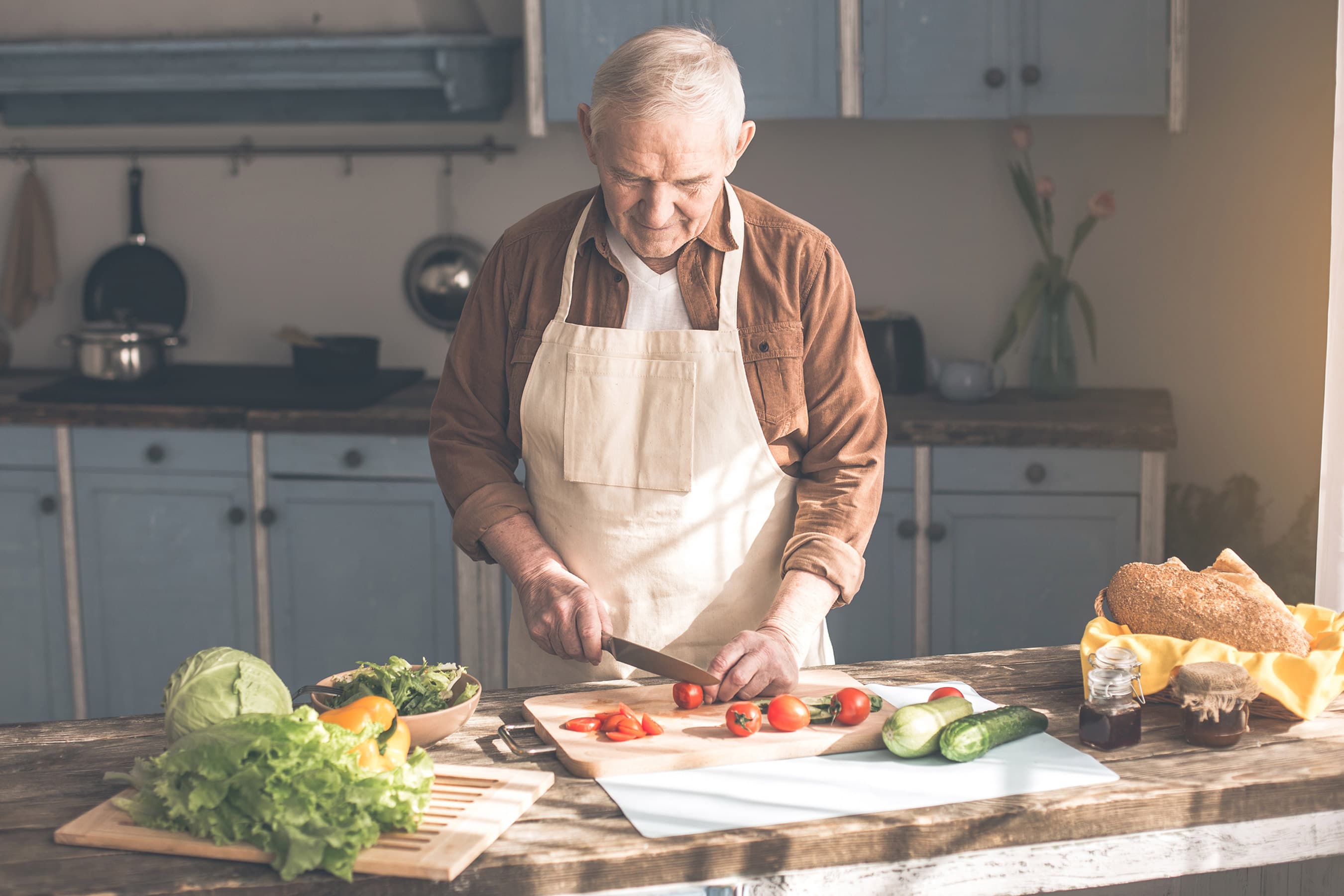
For some older adults, especially those living alone, preparing meals can be both awkward and troublesome. This can lead to skipped or unbalanced meals. Hit-or-miss eating habits can, in turn, lead to loss of energy and malnutrition. Coupled with the fact that older adults often need more calcium (for strong bones), more fiber (to prevent constipation), and adequate amounts of other nutrients, poor meal habits can directly affect your health.
Ways to prepare & eat meals
- Make a list before you shop for food. Include fish, poultry, lean meats, low fat dairy products, eggs, wholegrain breads and cereals, beans and lentils, nuts and seeds, fruit and vegetables.
- When you shop for meat or poultry, ask a store clerk to cut or repackage large quantities into smaller single- or double-serving portions.
- Take advantage of salad bars in supermarkets. They’re a convenient way to incorporate more vegetables into your diet.
- Buy some back-up supplies of nutritious foods—like tuna canned in water and other sandwich fixings, or low-salt soups—for days when you don’t have the time or inclination to cook a full meal from scratch.
- Read labels. Avoid foods high in saturated fat, salt, and sugar. These ingredients contribute to many of the chronic health problems that affect people after age 40.
- Prepare double portions of main dishes, so you can reheat leftovers a day later.
- Share shopping, meal preparation, and meals with a friend or neighbor.