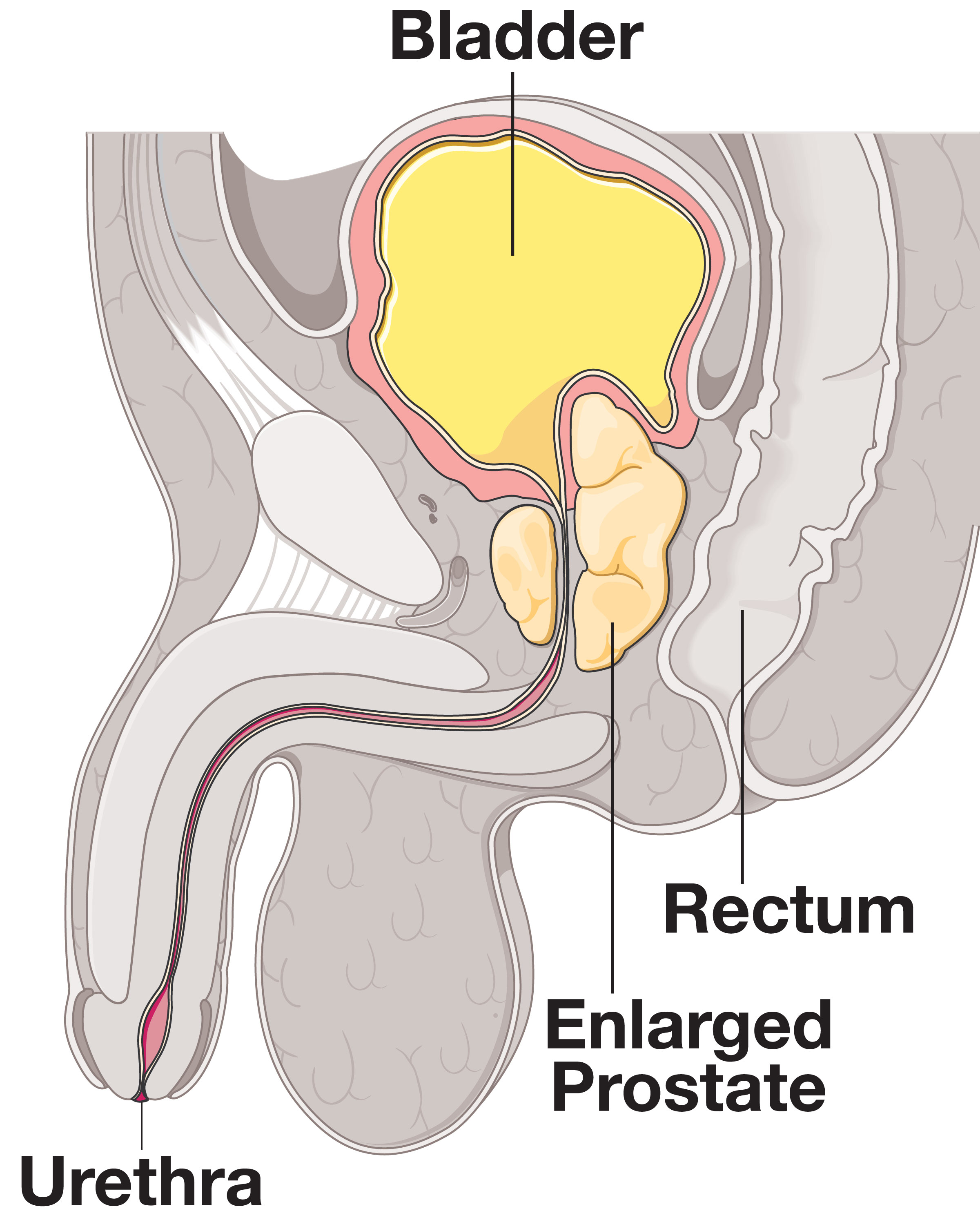
It helps make semen, the fluid that contains sperm.
It is under the bladder and in front of the rectum.
It surrounds the upper part of the urethra. This tube empties urine from the bladder.
It is about the size of a walnut in a young man and slowly gets larger with age.
Prostate Problems
Prostatitis. The prostate gland is inflamed or infected. This can be an acute or chronic problem.
Enlarged prostate. This is also called BPH. This stands for benign prostatic hyperplasia. This is the most common prostate problem in men over age 50. BPH is not cancer. It just means the prostate keeps growing.
Prostate cancer. This is the second most common type of cancer that men get. (Skin cancer is the first.) Prostate cancer is much less common than BPH.
Signs & Symptoms
Causes & Risk Factors
Prostatitis
• Pain and burning when you urinate, have an erection, or ejaculate
• Strong urges to urinate. You urinate often, even at night.
• A hard time starting to urinate. You don’t empty your bladder all the way.
• Pain in your lower back and/or between the scrotum and anus
• Blood in the urine
• Fever and/or chills
Prostatitis
• The prostate is inflamed or infected. This can be an acute or chronic problem.
• Different types of prostatitis are caused by different things, such as pelvic floor muscle damage, bladder infections, sexually transmitted infection, urinary blockage, urinary tract infection, using a urinary catheter, and having BPH.
Enlarged Prostate (BPH)
• Increased urge to urinate
• Urinate often, especially during the night
• Stopping and starting again several times when passing urine
• Bladder is not emptied all the way when urinating
Enlarged Prostate (BPH)
• Normal aging. More than half of men in their 60s have benign prostatic hyperplasia (BPH). More than 90% of men over age 80 have BPH.
• Prostate infections can increase the risk.
Prostate Cancer
Prostate cancer may have no symptoms until it is advanced. When symptoms occur, they include:
• Symptoms of an enlarged prostate
• Blood in the urine
• Swollen lymph nodes in the groin area
• Erectile dysfunction
Prostate Cancer
• Aging. After age 50, the chances increase rapidly.
• Race. African American men are more likely to get prostate cancer than Caucasian, Asian and Hispanic American men.
• Family history. The risk is higher if your father or brother has or had prostate cancer.
• Other. Men who eat a lot of calcium (from dairy foods or supplements) may have a slightly higher risk. Also, there may be a link with certain chemical exposures. Regular exercise and a healthy diet may be protective factors.
What should you do if you have any of these signs?
If you can’t pass urine at all, get medical help right away. For other signs and symptoms, see your doctor.
Diagnosis
Your doctor will do an exam and ask questions, such as, What symptoms do you have? How much do they bother you? Did your father or brother have prostate problems? Be ready to answer these questions before you see the doctor.
Your doctor may ask for a sample of your urine. If this shows bacteria, an antibiotic is prescribed. This kills the germ that causes the infection. Some men keep getting this kind of infection. Why? They may have a defect in the prostate gland that allows bacteria to grow. Surgery can correct this problem.
If no bacteria is found, your doctor looks for other problems that could cause your symptoms. They may order tests to screen for other prostate problems.
Screening Tests
These tests help the doctor find out if the problem is an enlarged prostate or prostate cancer.
Digital rectal exam. This is done in the doctor’s office. The doctor puts a glove on and inserts a finger into the rectum. The doctor feels the prostate to check the size of the prostate and if any pain or lumps are present.
PSA blood test. A high PSA may be a sign of prostate cancer. It could be a sign of BPH or prostatitis, too. PSA blood tests are not a sure thing to detect prostate cancer.
Imaging. Certain X-rays or other tests are done to get a picture of the prostate.
Urine flow study. A special device you urinate into measures how fast your urine flows. A reduced flow could mean that you have BPH.
Treatment
Prostatitis
Acute and chronic bacterial infections are treated with antibiotics.
For an inflamed prostate without a bacterial infection, treatment depends on the cause. Medications to treat pain and other symptoms are part of the treatment.
BPH
When symptoms are minor, no treatment may be needed at that time. The BPH is monitored to see if it causes problems or gets worse.
Medicine. One type helps relax the bladder neck muscle and the prostate. Another type causes the prostate to shrink.
Surgery.* May be done when symptoms are severe or drug therapy has not worked well. There are many types of surgery.
*Surgery for BPH can result in problems, such as impotence and/or incontinence. Discuss the benefits and risks of treatment options with your doctor. Most men who have surgery have no major problems.
Prostate Cancer
Treatment depends on the man’s age, general health, and how slow the cancer is expected to grow or if it has spread beyond the prostate gland. Sometimes, no treatment is done at the time but is regularly monitored.
Surgery. There are many types. Ask your doctor which one(s) best meet your needs.
Radiation therapy. With one type, radioactive material is placed inside the prostate gland. Another type uses a large machine outside the body to target the cancer cells.
Hormone therapy. This uses surgery and/or medicines to lower the level of hormones to reduce cancer growth.
Chemotherapy. Drugs, often given through an IV, kill or slow the growth of cancer cells.
Immunotherapy. This uses medicines to stimulate your immune system to recognize and destroy cancer cells.
Targeted therapy. This uses medicines to attack cancer cells while doing little damage to normal cells.
Self-Care
Prostatitis
Take antibiotics, as prescribed.
Rest until fever and pain are gone.
Take an over-the-counter medicine for pain and swelling, if needed. Take it as directed.
Enlarged Prostate (BPH)
Don’t take over-the-counter (OTC) medications with antihistamines or decongestants unless approved by your doctor.
Discuss the use of the OTC plant extract saw palmetto with your doctor before you take it. Some small studies have shown benefit.
Eat a healthy diet and avoid or limit processed and sugary foods.
Enlarged Prostate & Prostatitis
Don’t smoke.
Reduce stress in your life.
Take warm baths.
Don’t let your bladder get too full. Urinate as soon as you get the urge. Relax when you urinate.
Empty your bladder before bedtime.
Drink 64 or more ounces of water and other non-sugary liquids every day. Don’t drink liquids before going to bed.
Avoid alcohol and caffeine, especially in the evening.
Prostate problems are only one health concern for men. Get regular checkups to screen for other problems, too.