Check those Moles
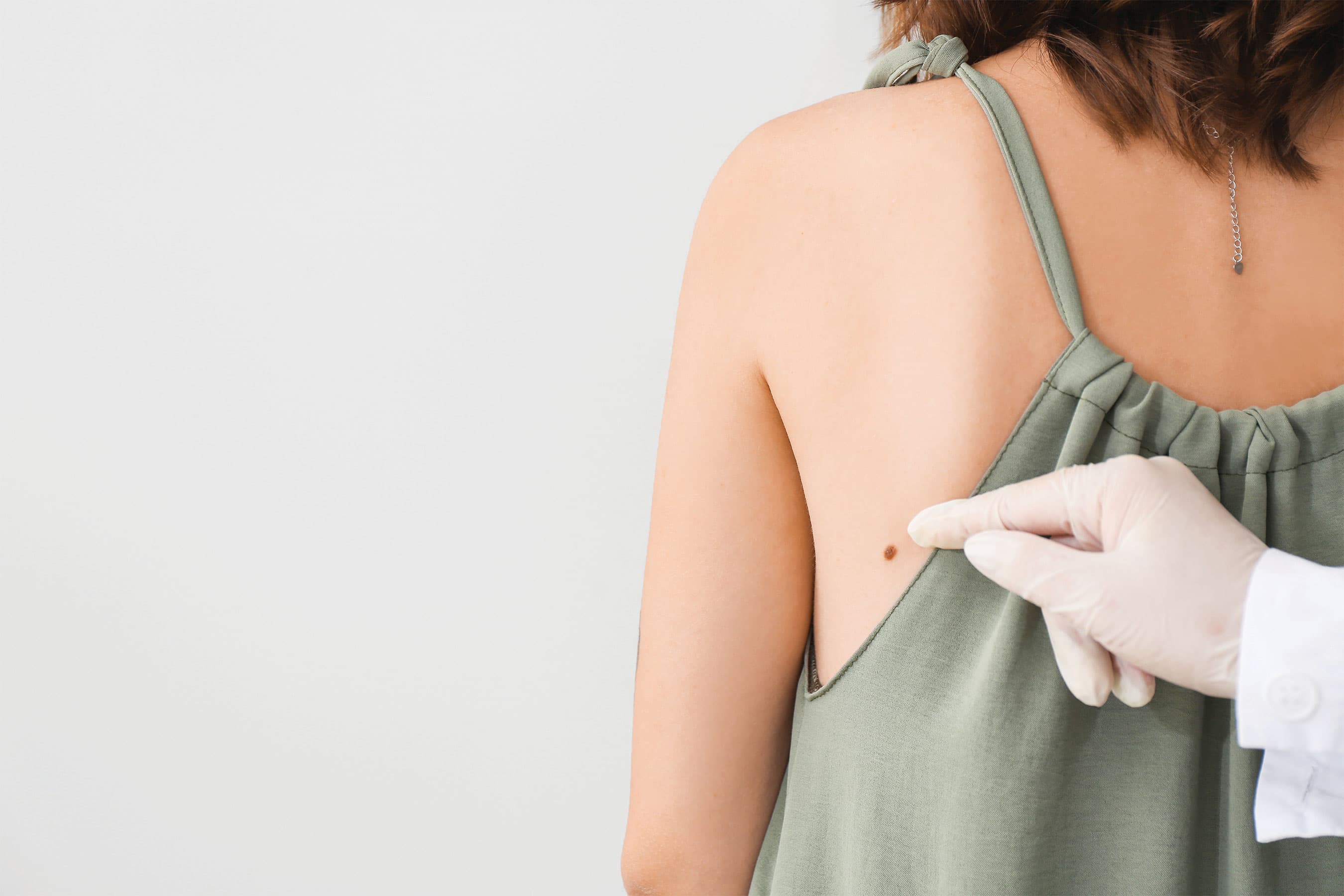
As you age, it’s normal for your skin to change and for new spots and moles to appear. Regular skin self-checks will keep you abreast of any changes so you can monitor for problem areas or suspicious moles.
Skin cancer occurs when skin cells are damaged and grow out-of-control forming malignant tumors. Skin cancer is highly treatable when caught early. This makes regular skin checks important for prompt treatment.
Normal Moles
Most people have moles, and the vast majority of them are harmless. A normal mole generally stays the same shape, size, and color for many years and occasionally may even fade away.
Pay attention to the moles on your body and watch for signs of change. Normal moles generally have these characteristics:
- Evenly colored
- Brown, tan, or black
- Flat or raised
- Round or oval in shape
- Usually less than ¼ inch (6 mm) in diameter
- Unchanging
Concerning Moles
A new mole, a mole that begins to change, or a sore that doesn’t heal could be a warning sign of skin cancer. Use the ABCDE method to monitor your moles:
- A- Asymmetrical: Is the shape uneven, or does one half not match the other?
- B- Border: Are the edges of the mole irregular and appear jagged, blurred, or notched?
- C- Color: Is the color uneven?
- D- Diameter: Is it greater than ¼ inch (6mm) or larger than the average pencil?
- E- Evolving: Is the mole changing size, shape, or color, or becoming raised or crusty?
What To Do
Talk to your doctor if you have any concerns about new or changing moles. They may refer you to a Dermatologist for additional screening or treatment.
Protecting your skin from damage is the best way to prevent skin cancer.
- Wear sunscreen with an SPF of 30 or higher.
- Stay in shady spots.
- Wear a wide-brim hat.
- Wear clothing that covers your arms and legs.
- Wear sunglass with UVA and UVB protection.