HealthyLearn Site Navigation:
Online Clinic
Common Skin Conditions
Skin Conditions
Corns & Calluses
August 18, 2026
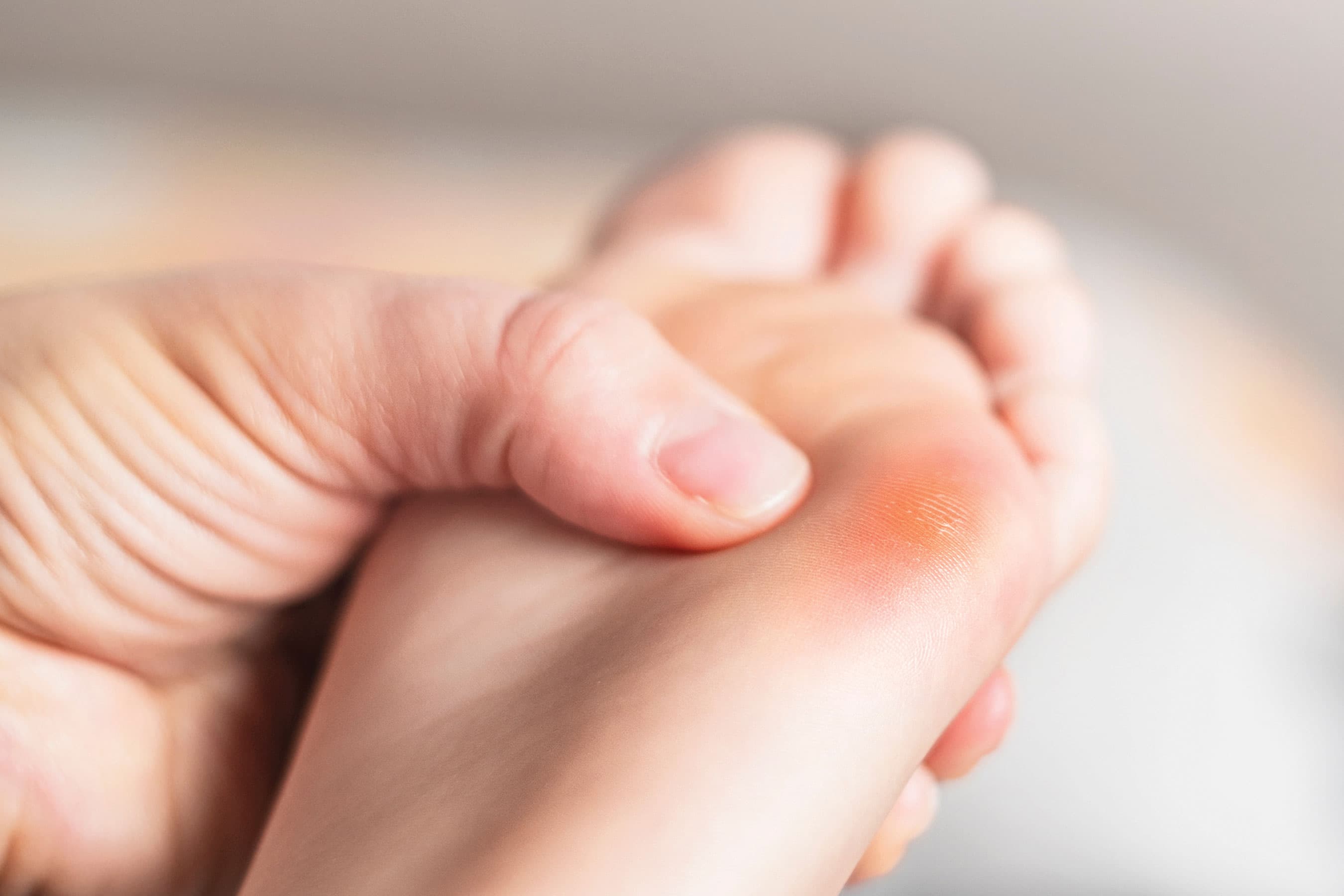
Corns and calluses are extra cells made in a skin area that gets repeated rubbing or squeezing.
Signs & Symptoms
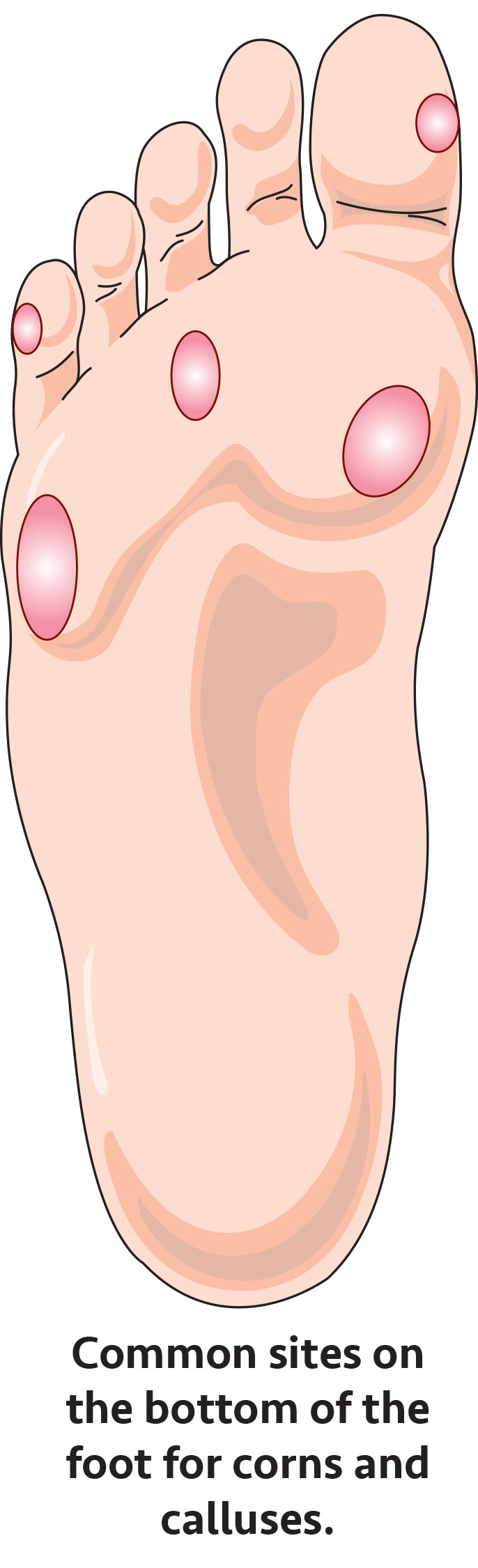
- Corns are areas of dead skin on the tops or sides of the joints or on the skin between the toes.
- Calluses are patches of dead skin usually found on pressure spots, such as the balls or heels of the feet, on the hands, and on the knees. Calluses are thick and feel hard to the touch. They are often larger than corns.
Causes
Footwear that fits poorly causes corns and calluses. So can activities that cause friction or pressure on the hands, knees, and feet.
Treatment
Self-care treats most cases. If not, a family doctor or foot doctor (podiatrist) can scrape the hardened tissue and peel away the corn with stronger solutions. Sometimes warts lie beneath corns and need to be treated, too.
- Continued or worse pain
- No improvement after 2 to 3 weeks
Self-Care / Prevention
{Note: Persons with diabetes should see a doctor for treatment for foot problems.
Corns
- Don’t pick at corns. Don’t use toenail scissors, clippers, or any sharp tool to cut off corns.
- Don’t wear shoes that fit poorly or that squeeze your toes together.
- Soak your feet in warm water to soften the corn. Then, rub with a pumice stone or nail file to remove a layer of toughened skin.
- Wear socks with shoes and sandals to reduce friction on your feet.
- Cover the corn with a protective, nonmedicated pad or bandage which you can buy at drug stores.
- If the outer layers of a corn have peeled away, apply a nonprescription liquid of up to 40% salicylic acid. Gently rub the corn off with cotton gauze.
- Ask a shoe repair person to sew a metatarsal bar onto your shoe to use when a corn is healing.
Calluses
- Don’t try to cut a callus off.
- Soak your feet in warm water to soften the callus. Pat it dry.
- Rub the callus gently with a pumice stone.