Understanding Psoriasis
A misunderstood skin condition.
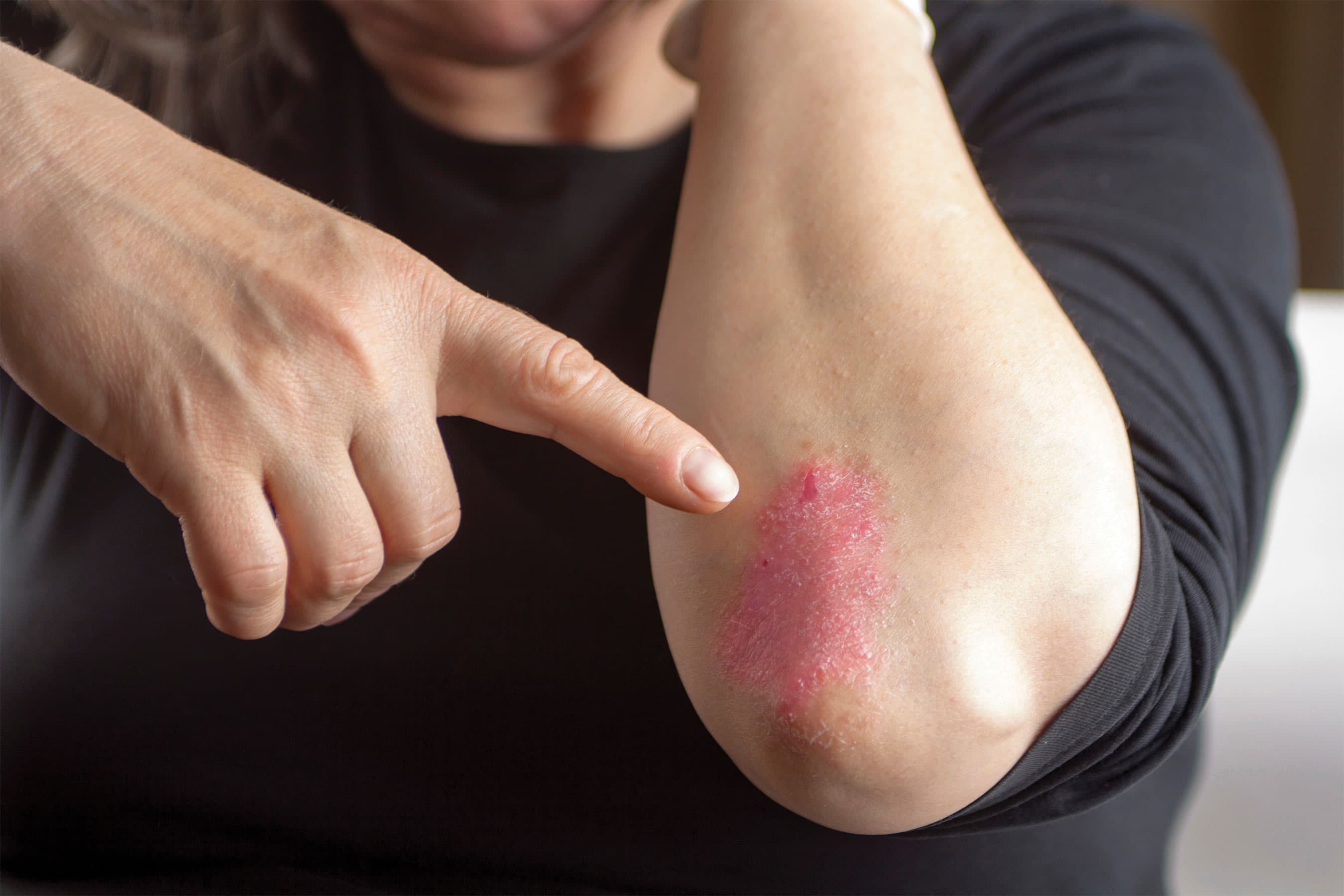
Psoriasis is a chronic, genetic skin disease that’s not contagious. It results when faulty signals in the immune system prompt skin cells to redevelop too quickly, causing red, scaly areas that crack and bleed. It often affects the elbows, knees, scalp, and torso but can appear anywhere on the body.
Psoriasis affects far more than the skin. It can have serious physical and emotional effects. Research shows that psoriasis can cause as much disability as other major diseases. Some people with psoriasis develop a type of arthritis, known as psoriatic arthritis. This can be very painful and cause joint damage.
While there is no cure for psoriasis, there are ways to help manage this condition.
Many people have flare ups when certain triggers are present, such as stress, skin injury, infections, or illness. Talk to your doctor about healthy ways to avoid your triggers.
Itching is a common effect that can interfere with a person’s life. Keeping skin moisturized, cold packs, and over the counter itch creams may help. Ask your doctor about prescription medication options.
Avoid smoking, which puts stress on the body, which can worsen symptoms.