HealthyLearn Site Navigation:
Online Clinic
Pregnancy & Prenatal Care
Women's Health
Backaches While Pregnant
June 19, 2026
Causes
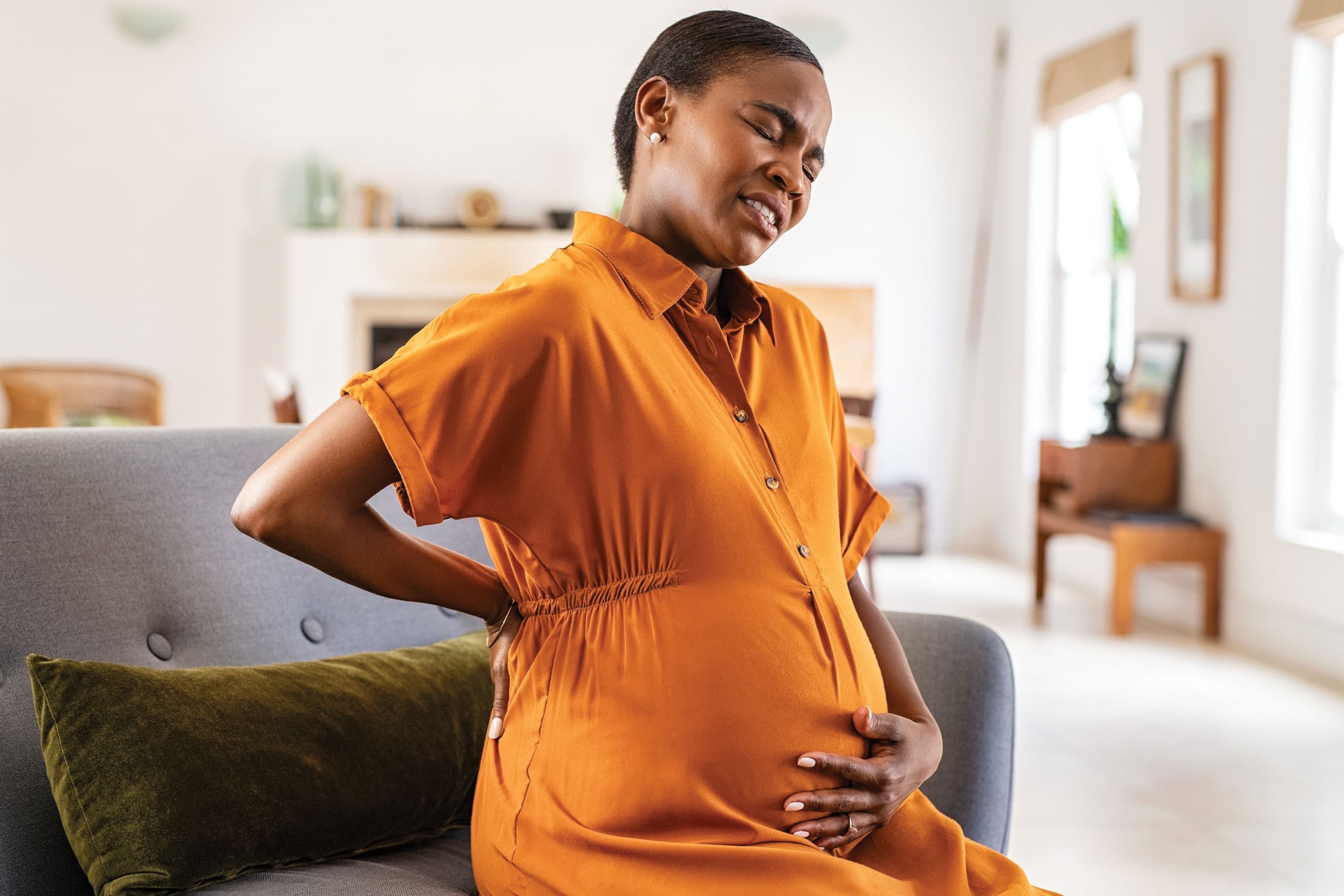
Pregnant women get backaches because:
- The growing uterus and extra weight pull the body forward. Standing this way can strain the back muscles.
- Hormones are released during pregnancy. These make the ligaments soften and stretch. Ligaments are tissues that surround and support the joints.
- Joints in the lower back get sore from pressure. This happens to joints in the pelvic area, too. The baby is growing in size and weight.
- The baby presses against the tailbone.
- Abdominal muscles that support the spine stretch and strain.
Prevention
Do exercises your health care provider tells you to do. Use good posture, too. Keep your spine straight when you are standing. Have a friend check your back for curving: Stand with your heels against a wall. Ask your friend to look at your back. Tell him or her to let you know if it curves. Center your weight over the pelvic area. Be careful when you bend over, too. Bending wrong can give you a backache.
Back Labor
Most women have some back pain during labor. Some women have it through their whole labor. This is called back labor. It is caused by the way the baby is lying. The back of the baby’s head presses against the tailbone. Or it may press slightly to one side of it.
Self-Care for Good Posture
When you stand:
- Stand straight.
- Tuck in your bottom.
- Don’t hollow your back.
- Don’t tighten your shoulders or hold them back. Keep them dropped.
- If you have to stand for a long time: Stretch your feet and shift your weight. Rest one foot and then the other on a footstool or telephone book.
When you sit:
- Sit on a straight chair with a high back.
- Rest your back against the chair’s back.
- Put a pillow at the small of your back.
- Rest one or both feet on a footstool.
- Don’t sit too long. It strains your lower back. Get up and walk around.
When you bend:
- To pick something up, squat down on your heels and bend your knees. Keep your upper body straight. Don’t lean over from the waist. Use the strength from your legs, not your back.