Endometriosis
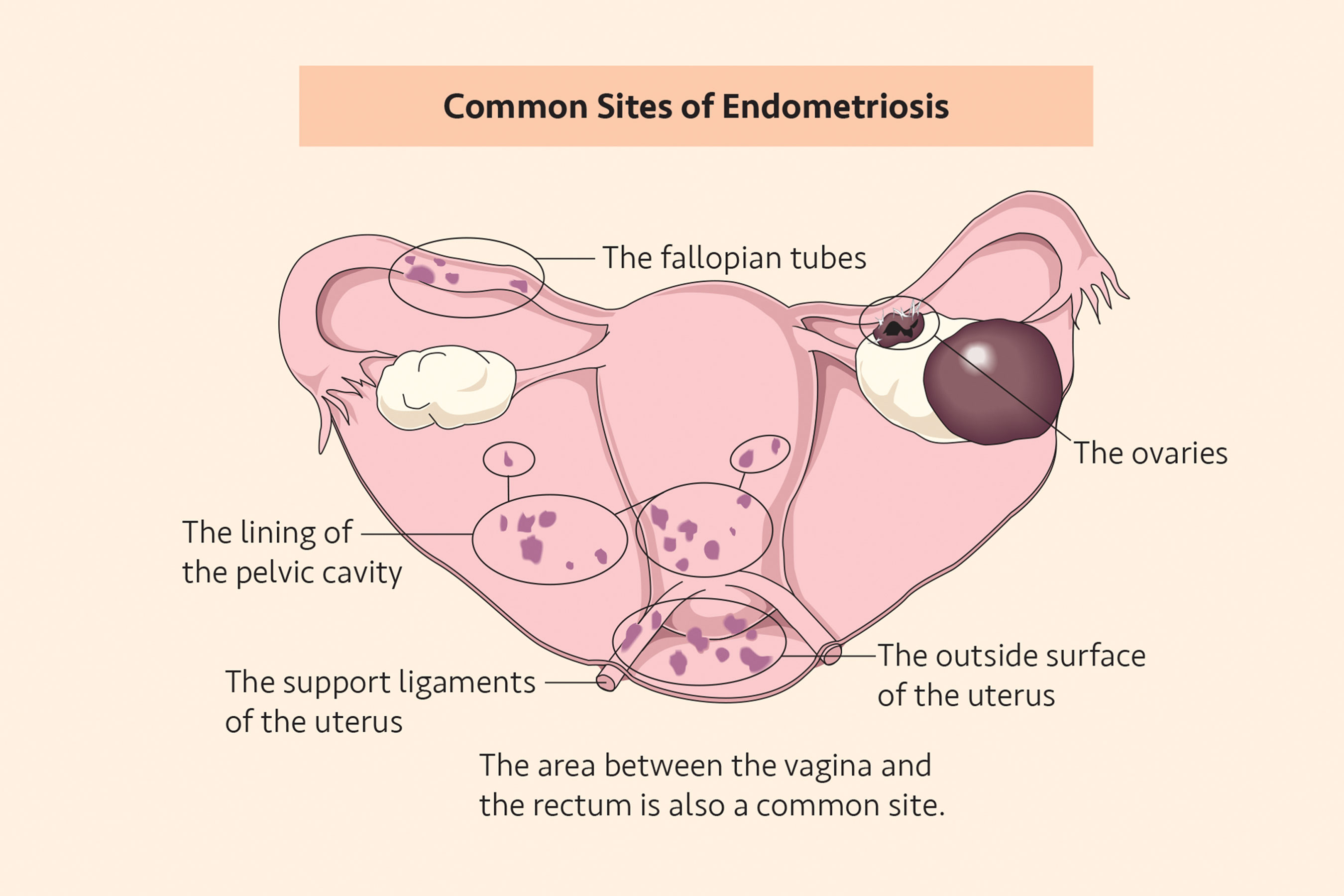
The lining inside of the uterus is called the endometrium. Sometimes cells from it grow outside of the uterus in the abdomen or in some other areas of the body. This is called endometriosis. It can cause scar tissue to build up around your organs.
Signs & Symptoms
- Pain before and during menstrual periods. The pain is usually worse than normal menstrual cramps.
- Pain during or after sex.
- Pain when passing urine.
- Lower back pain. Painful bowel movements. Loose stools with menstrual periods.
- The pelvis feels sore or tender.
- Spotting of blood before a monthly period starts.
- Menstrual periods are longer or heavier than normal.
- Infertility.
Note: Some females have no pain.
Causes
The exact cause is not known. It could be that some of the lining of the uterus shed during menstruation moves backwards through the fallopian tubes into the abdominal cavity. It then attaches and grows in these places. It could also be due to problems with the immune system and/or hormones. The condition may also run in families.
A gynecologist diagnoses endometriosis. He or she can examine the organs in the abdomen and pelvis to find out the extent of the problem. To do this, the doctor inserts a slim telescope through a very small opening made in the navel. This is done in an outpatient setting.
Treatment
Surgery Options
- One type uses a very small, lighted tube to remove or destroy areas of endometriosis. This reduces pain. It allows pregnancy to occur in some women.
- Another type removes the ovaries. The fallopian tubes and uterus can also be removed. This gets rid of the pain. After this, a woman can’t get pregnant.
Medication Therapy Options
- Pain medicines. These include over-the-counter medicines, such as ibuprofen and naproxen sodium.
- Birth control pills. These are given in a certain way to stop ovulation and menstruation for a set amount of time. They are used for very mild cases.
- Anti-estrogens. These cause a woman’s body to make less estrogen.